
A great fashion idea is only the beginning of building a clothing brand. Turning that idea into a production-ready garment requires much more than a sketch or moodboard. Fashion founders need clear documentation, technical specifications, sourcing information and production tools to communicate their vision effectively to designers, suppliers and manufacturers.
Whether you’re developing your first collection or adding a new product to an established brand, having the right documents in place can make the journey from fashion idea to production more organized and easier to manage.
Here are 10 essential documents and tools every fashion founder should consider preparing.
1. Fashion Design Brief
Start by documenting the overall direction of your product.
A fashion design brief outlines what you want to create and provides context for the people involved in developing it. It can include your product concept, target customer, garment category, inspiration, aesthetic direction and intended use.
For example, a founder developing a resort-wear collection should have clarity about the customer, occasion, desired look and product positioning before moving into technical development.
A clear brief helps ensure that creative and production decisions remain aligned with the original concept.
2. Technical Sketch or Fashion Flat
A moodboard or fashion illustration communicates the creative vision, but a technical sketch or fashion flat provides more useful information for product development.
A technical drawing can show the garment from the front and back and highlight details such as:
- Seams and panels
- Pockets
- Sleeves
- Necklines
- Closures
- Construction details
- Placement of trims or embellishments
This gives a manufacturer or product development team a clearer visual reference for understanding the garment.
3. Tech Pack
A tech pack is one of the most important documents in clothing production. It translates a design concept into technical and manufacturing information.
Depending on the garment, a tech pack may include:
- Technical sketches
- Measurements
- Fabric specifications
- Colour information
- Trims
- Construction details
- Stitching requirements
- Labels
- Artwork
- Finishing instructions
A sketch may show what a garment should look like, but the tech pack helps explain how it should be made.
The exact information required will vary depending on the product and production process, but the objective remains the same: provide clear specifications that reduce ambiguity during development and manufacturing.
4. Measurement Chart and Size Specifications
Before sampling begins, establish the intended size range and key garment measurements.
A measurement chart can include measurements such as length, chest or bust, waist, hip, shoulder and sleeve length, depending on the product.
It can also include tolerances and grading requirements where applicable.
Having these specifications documented gives the development team an objective reference when reviewing samples. Instead of relying only on visual judgement, founders can compare the physical garment against agreed measurements.
5. Fabric and Trim Sourcing Information
The materials used in a garment can significantly influence its appearance, comfort, performance and cost.
Keep clear information about the fabrics and trims required for your product, including where relevant:
- Fabric composition
- Weight or GSM
- Colour
- Texture
- Finish
- Stretch
- Buttons
- Zippers
- Labels
- Embellishments
- Other accessories
This information helps suppliers understand what needs to be sourced and gives founders a reference when reviewing materials and samples.
It is particularly important when a specific fabric or trim contributes significantly to the look or functionality of the garment.
6. Costing Sheet and Budget
A fashion founder should understand the financial requirements of product development before moving too far into production.
A costing sheet can help track expenses associated with:
- Fabric and materials
- Trims
- Pattern development
- Sampling
- Manufacturing
- Finishing
- Packaging
- Other production requirements
Your overall budget and target product cost are related but not identical. A total budget tells you what you can allocate to the project, while a target cost helps you evaluate whether individual products and production options fit within your financial plan.
Maintaining an organized costing sheet can also make it easier to compare sourcing and manufacturing options.
7. Sample Review and Approval Sheet
Once a physical sample has been developed, don’t rely entirely on memory or informal feedback.
A sample review sheet provides a structured way to evaluate the garment.
Review areas can include:
- Fit
- Measurements
- Fabric
- Stitching
- Construction
- Trims
- Colour
- Print or embroidery placement
- Finishing
- Comfort
- Functionality
If revisions are required, document them clearly. Specify what needs to change and, where relevant, provide measurements or visual references.
This creates a clearer record of development and helps ensure that agreed revisions are not overlooked.
8. Production Timeline and Development Tracker
Fashion product development involves multiple stages, so creating a timeline can help founders understand what needs to happen and when.
A typical process may look like:
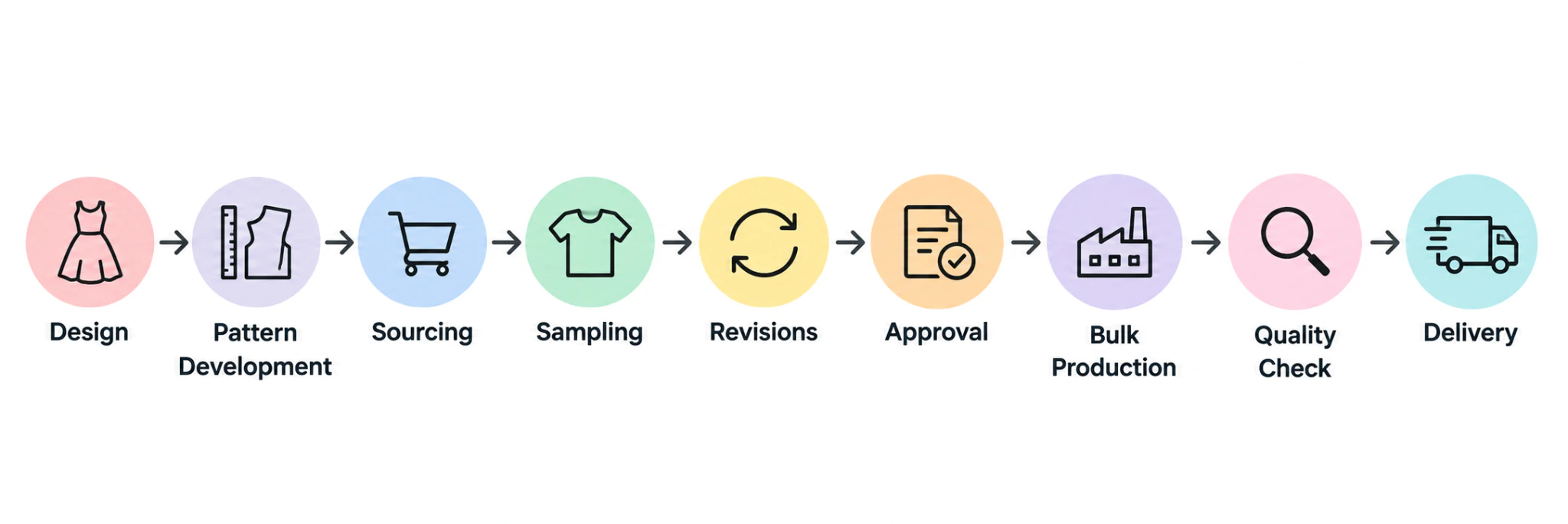
A development tracker can be used to record the status of each stage, outstanding tasks and approvals.
Avoid planning only around the final delivery date. Sampling, revisions and approvals can require additional time, so building reasonable flexibility into the timeline can make the process more manageable.
9. Supplier and Manufacturer Information
Your supplier and manufacturer network is an important business resource. Keep organized information about the companies and professionals you work with.
Depending on your requirements, this may include:
- Supplier or manufacturer name
- Product expertise
- Contact details
- Production capabilities
- MOQ information
- Material sourcing capabilities
- Sample history
- Quality observations
- Communication records
The objective isn’t simply to maintain a contact list. It is to build useful knowledge about which production partners are suitable for different products and requirements.
The right clothing manufacturer should be evaluated according to your product category, quality expectations, quantities, capabilities and overall production needs.
10. NDA and Confidential Information Documentation
Fashion founders may need to share commercially sensitive information with external partners during product development.
This can include:
- Design sketches
- Tech packs
- Samples
- Product specifications
- Pricing information
- Production details
Depending on the circumstances, a Non-Disclosure Agreement (NDA) or other appropriate confidentiality documentation may help establish expectations around sensitive information.
The appropriate legal approach depends on the specific situation, so founders should seek professional legal advice when necessary.
The important point is to think about information protection before sharing valuable product and business details with external parties.
Fashion Founder Document Checklist
Before taking your product into development or production, use this checklist:
- Fashion design brief
- Technical sketch or fashion flat
- Tech pack
- Measurement chart
- Size specifications
- Fabric and trim information
- Costing sheet
- Sample review and approval sheet
- Production timeline
- Supplier and manufacturer information
- NDA or appropriate confidentiality documentation
Not every product will require exactly the same documents. Requirements can vary depending on the garment category, production method, manufacturer and project.
Turn Your Fashion Idea Into a Production-Ready Product
The journey from fashion idea to production becomes easier to manage when creative concepts are supported by clear documentation.
A moodboard and sketch may start the process, but technical drawings, tech packs, measurements, material information, costing, sample feedback and production planning help turn that idea into something a manufacturer can understand and develop.
For fashion founders, the goal isn’t to create paperwork for the sake of it. The goal is to create clear communication between concept, development and production.
If you need support moving from concept → design → sourcing → sampling → production, working with an experienced fashion development partner such as The ODD Factory can help bring structure to the process.
The stronger your documentation and preparation, the clearer the path from your initial fashion idea to a production-ready garment.
Ready to build these documents? Explore Brand Packages for tech packs, size charts, vendor access, NDAs & 1:1 consultations everything to go from idea to production.