

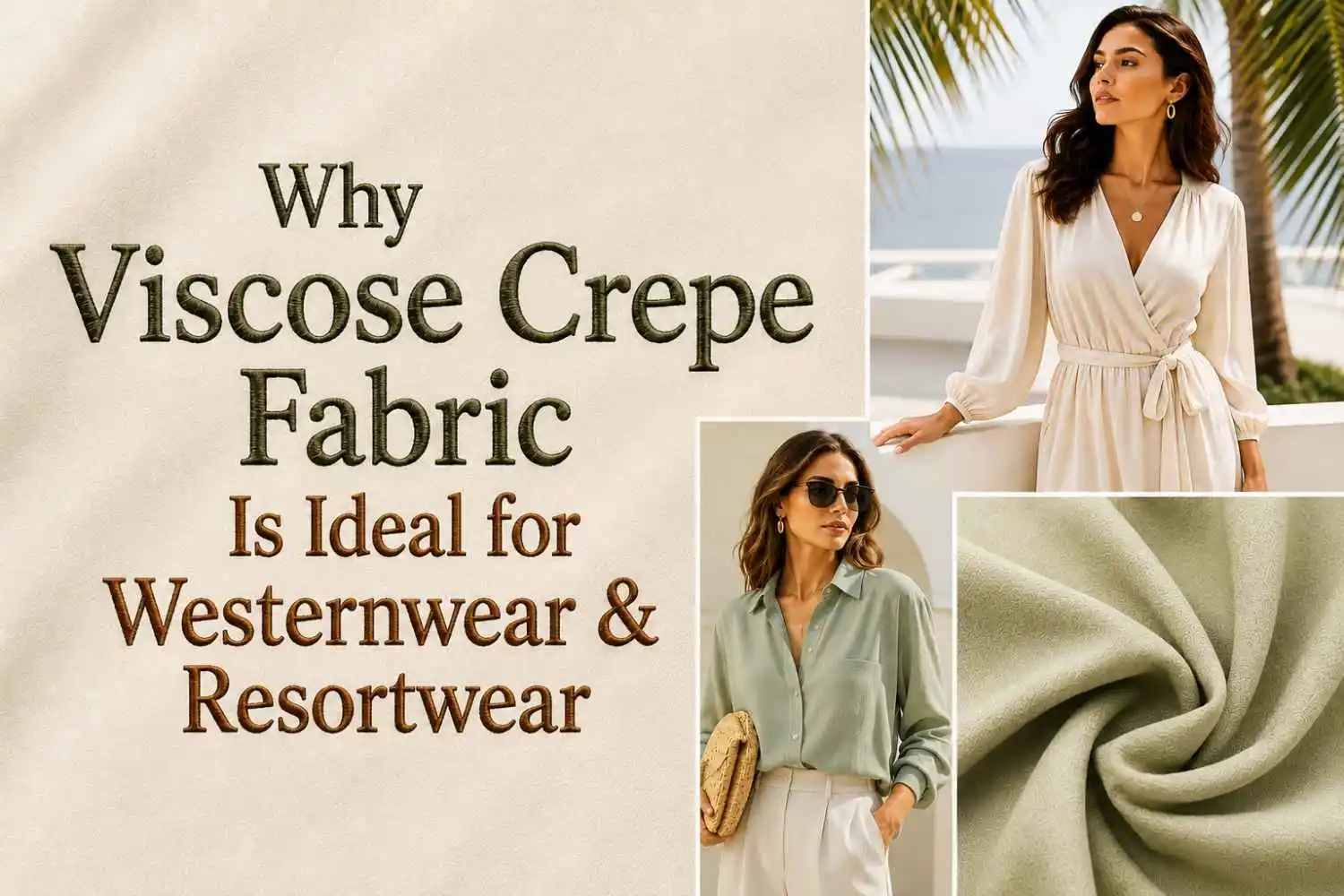
A great silhouette can still fall flat if the fabric underneath is too stiff, too heavy, or wrong for the setting. That’s why lightweight fabrics with real movement, for dresses, skirts, kaftans, trousers, and relaxed co-ords, matter as much as the pattern itself. Viscose crepe has become a default choice for exactly this reason: it combines a soft hand feel, fluid drape, and a textured surface that most smooth fabrics simply don’t have.
What Viscose Crepe Actually Is?
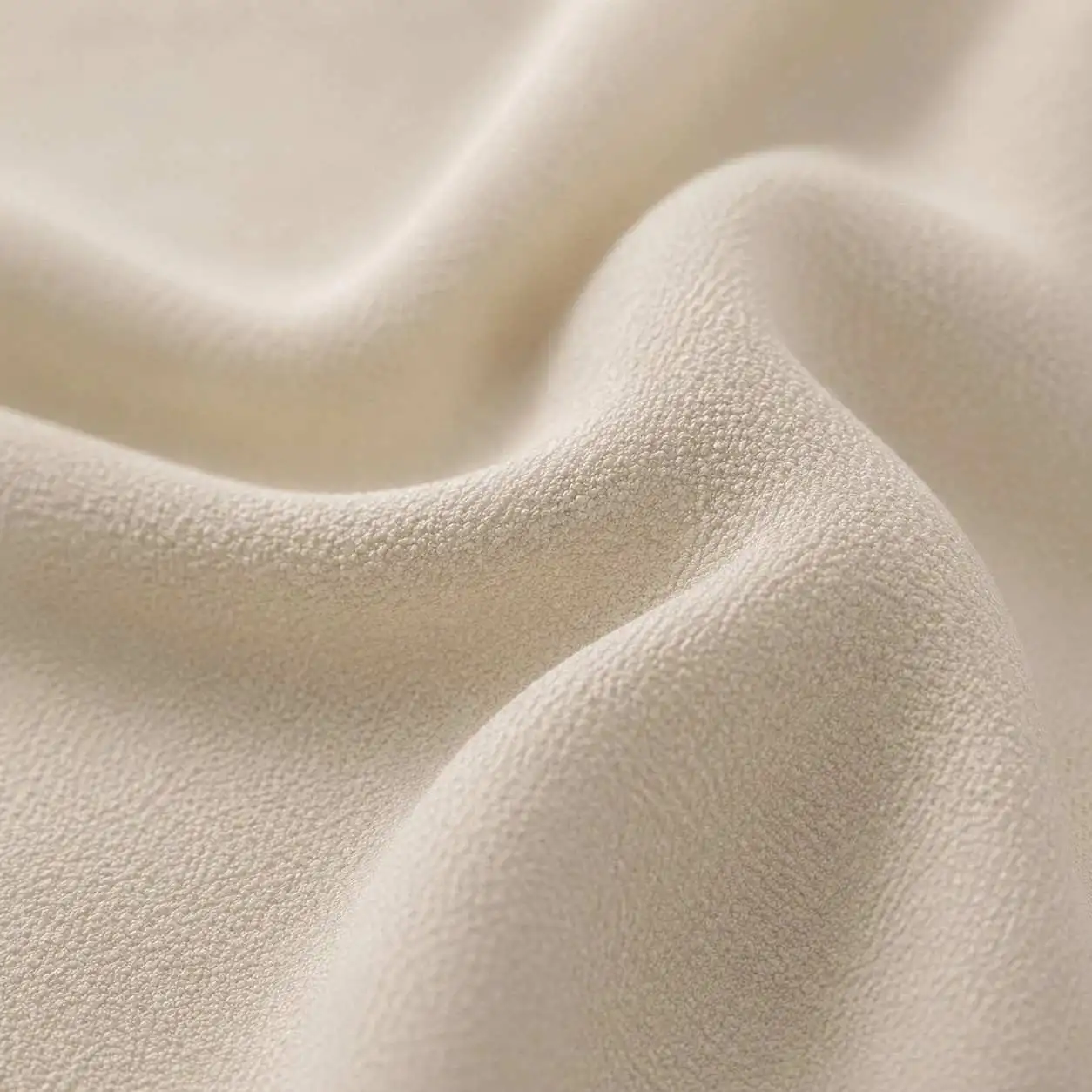 Viscose is a regenerated cellulose fibre, made by chemically processing wood pulp into a fibre that behaves more like a natural fabric than a synthetic one. “Crepe” isn’t a fibre at all; it’s a fabric construction, identified by its characteristic crinkled or pebbled surface, created through high-twist yarns, specific weaves, or finishing treatments.
Put the two together, and you get a fabric with viscose’s softness and drape, plus the visual texture of a crepe weave. One caveat worth flagging: weight, yarn twist, and finishing vary a lot between mills, so no two “viscose crepes” behave identically. A swatch test before bulk production isn’t optional; it’s the only way to know how a specific batch will actually perform.
Why Designers Reach for It?
It drapes instead of holding shape. Viscose crepe falls close to the body rather than standing away from it, which is exactly what maxi dresses, wrap dresses, wide-leg trousers, jumpsuits, and layered kaftans need. In westernwear especially, that fluidity softens otherwise simple, minimal cuts.
It suits warm-weather wear. Viscose fibres absorb moisture well, and a lightweight crepe construction adds breathability on top of that, a useful combination for resort pieces meant to be worn all day in heat.
Texture does the work embellishment usually does. A crepe surface has enough visual depth that a plain dress doesn’t read as flat or boring, which is why the fabric suits minimalist collections built around silhouette, colour, and movement rather than embroidery or sequins.
It takes colour and print exceptionally well. Viscose has strong dye affinity, which is part of why it’s the default base for tropical motifs, botanical prints, and bold resortwear graphics. Combined with drape, a print doesn’t sit static; it moves with the garment.
It carries a full westernwear range on one base fabric. The same viscose crepe, in different weights, can become a relaxed blouse, a midi dress, an asymmetric skirt, or a wide-leg trouser. A lighter construction suits the dress and blouse; a slightly heavier one gives the skirt and trouser enough body to hold shape. That lets a westernwear collection stay visually consistent while the silhouette changes from piece to piece.
It bridges casual and dressy. The drape keeps it relaxed; the texture keeps it from looking too casual. The same printed maxi dress that works with flat sandals during the day can be restyled for dinner, a genuinely useful trait for resortwear, where one wardrobe has to cover several occasions.
The Travel Question, With a Real Caveat
Crepe’s textured surface hides light creasing better than a flat, smooth fabric would. But it is not accurate to call viscose crepe wrinkle-proof or crease-resistant; that depends heavily on weight and finish, and some constructions crease just as readily as any other lightweight cellulosic. Care instructions vary just as much: some viscose crepe garments are machine- or hand-washable, while others, including higher-end resortwear pieces, are dry-clean only. Always follow the garment’s actual label rather than assuming based on fibre content alone.
The Sustainability Claim Needs Unpacking
Viscose gets called “eco-friendly” often, mostly because its raw material is wood. That’s an oversimplification. Standard viscose production is chemically intensive, and its environmental footprint depends on forestry sourcing, chemical handling, water use, and the manufacturing technology a mill actually uses, none of which is guaranteed just because the label says “viscose.”
Branded, certified alternatives exist to address this. Lenzing’s ECOVERO™ fibres, for instance, use certified or controlled wood sources and are independently verified, via the Higg Materials Sustainability Index, to use at least 50% less water and generate at least 50% lower carbon emissions than generic viscose. Brands sourcing responsibly should specify it by name rather than treating “viscose” alone as a sustainability claim.
Choosing the Right Construction
Before committing to a fabric for a collection, weigh:
- Silhouette – very fluid dresses want a lighter weight; trousers need more body.
- Opacity – lightweight crepes often need lining.
- Print scale – large motifs and small patterns read very differently once the fabric is moving.
- Finish – matte, textured, and lightly lustrous finishes each push the aesthetic differently.
- Care – test shrinkage, colourfastness, and washing behaviour before a production run, not after.
Getting From Fabric Choice to Finished Collection
Viscose crepe earns its place in westernwear and resortwear because it does several things at once: it moves the way flowing silhouettes need to move, it takes colour and print well, it adds texture without needing embellishment, and it can flex from a lightweight dress to a sturdier trouser within the same fabric family. None of that makes it universal; weight, finish, and fibre sourcing still vary enormously between suppliers, and claims about crease resistance or sustainability should be checked against the specific fibre and construction, not assumed from the name.
The fabric is only ever as good as the sourcing and sampling behind it. Getting the right weight, finish, and certified fibre source for a specific silhouette isn’t something to guess at from a spec sheet; it’s why brands typically source the right viscose crepe construction through a vetted supply chain and test a swatch before committing to a production run, rather than scaling up on assumptions.
If you’re developing a westernwear or resortwear collection and want help getting from concept to finished garment, The ODD Factory works end-to-end with international brands on design, ethical sourcing, sampling, and manufacturing. Get in touch to talk through your fabric and collection needs.