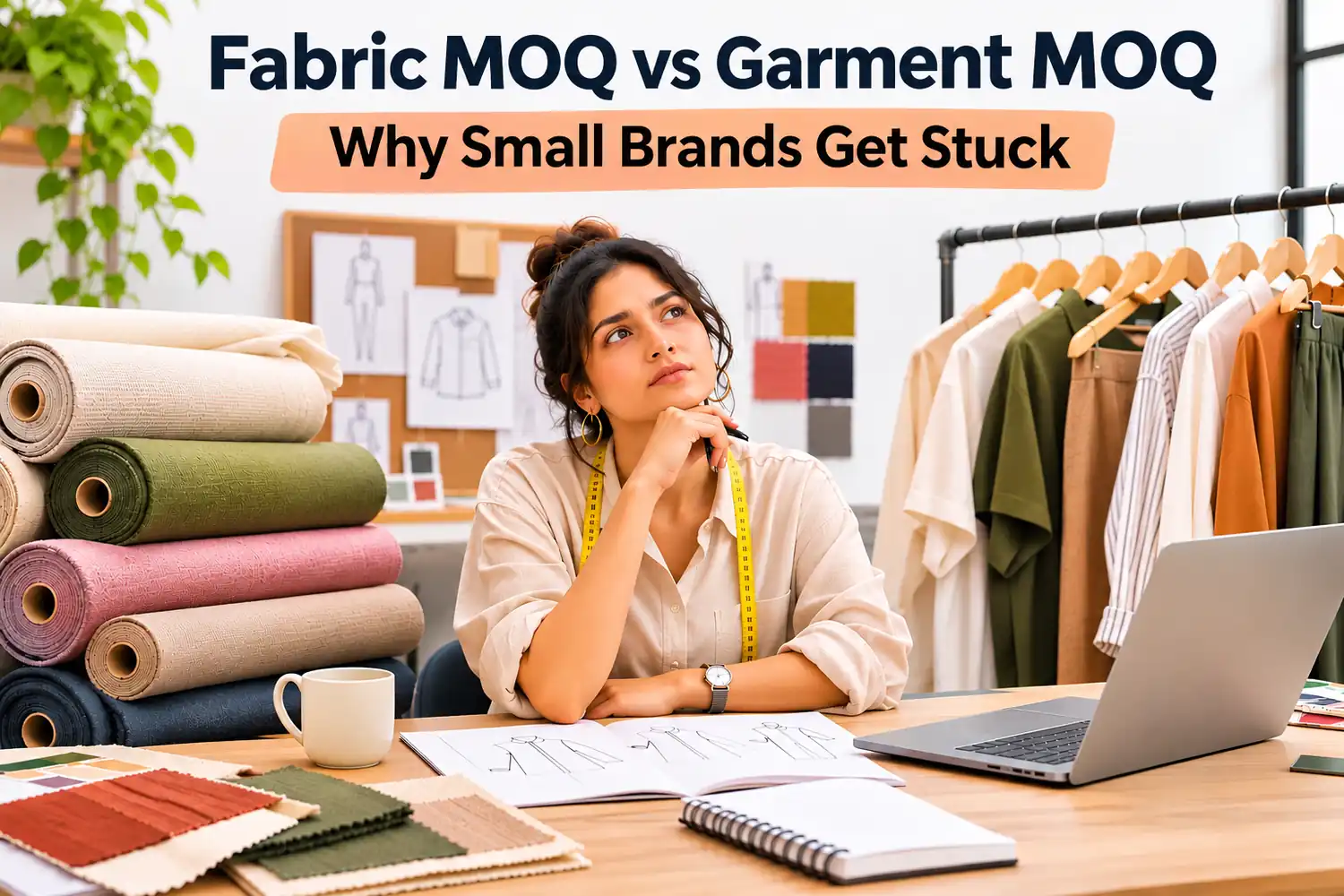
A small fashion brand might be ready to manufacture 100 shirts, but the fabric supplier could require a much larger fabric order before production can begin. The garment manufacturer may agree to the quantity, yet the material requirement can still hold up the entire order.
This is one of the common challenges new clothing brands face when working with manufacturers. The problem isn’t always the number of garments they want to produce. It’s the difference between the minimum quantities required at different stages of manufacturing.
Understanding fabric MOQ and garment MOQ can help brands plan their first collection, choose suitable materials, and avoid committing more money to inventory than they can realistically sell.
What Is Fabric MOQ?
Fabric MOQ is the minimum quantity of fabric a supplier or textile mill is willing to sell or produce for an order. It’s usually measured in metres, yards, kilograms, or rolls.
The minimum depends on the type of fabric and how it’s produced. For example, ready-stock cotton fabric may be available in smaller quantities, while custom-developed fabric can require a much larger commitment.
Several factors affect fabric MOQ:
- Fabric construction – Knitted, woven, and specialised fabrics have different production requirements.
- Custom dyeing – Producing a specific colour can require a separate dyeing batch.
- Printing – Custom prints and patterns may have their own production minimums.
- Fabric finishing – Special treatments and finishes can add further requirements.
Fabric colour also matters. Different dye batches can produce slight shade variations, so manufacturers generally need to manage fabric from different lots carefully.
What Is Garment MOQ?
Garment MOQ refers to the minimum number of finished clothing pieces a garment manufacturer agrees to produce for an order.
Unlike fabric MOQ, which is measured in metres or kilograms, garment MOQ is measured in pieces.
For example, a manufacturer might accept an order of 100 T-shirts in one style, while another may require 300 pieces for the same product.
Garment MOQ depends on factors such as:
- Complexity of the garment design.
- Number of styles and colour variations.
- Cutting and stitching requirements.
- Labour and production planning.
- Custom labels, buttons, zippers, and other trims.
A simple T-shirt and a structured jacket don’t require the same manufacturing effort. This is why garment MOQ can differ significantly between products and factories.
Why Do Fabric and Garment MOQs Differ?
The main reason is that fabric production and garment manufacturing are two different processes, each with its own production requirements.
A textile mill produces fabric, while a garment factory uses that fabric to cut, stitch, and finish clothing.
Consider this example.
A brand plans to manufacture 100 T-shirts, with each garment requiring approximately 1.6 metres of fabric. The total requirement is 160 metres. However, the fabric supplier has a minimum order requirement of 400 metres.
The garment factory may be comfortable producing 100 T-shirts, but the brand must still purchase 400 metres of fabric. This leaves 240 metres of extra material that needs to be stored or used in future production.
These figures are illustrative. Actual fabric consumption and supplier minimums depend on the garment design, fabric specifications, and supplier.
This is where the two MOQs create a problem.
Why Small Fashion Brands Get Stuck
For emerging brands, the challenge goes beyond meeting a manufacturer’s minimum quantity.
- Limited production budgets
Ordering more fabric than required increases the initial investment. Small brands often have limited funds for sampling, production, marketing, packaging, and inventory. Spending too much on unused fabric can affect the rest of the launch budget.
- Too many colour options
A brand might want to launch one design in four different colours. However, each custom colour can require a separate dyeing or printing arrangement.
This increases the quantity of fabric that needs to be purchased and can make a small collection expensive to produce.
- Multiple styles with different fabrics
A collection may include shirts, trousers, dresses, and jackets. If each design uses a different fabric, the brand has to manage several material requirements instead of one shared fabric order.
- Unused fabric and inventory risk
Meeting a fabric supplier’s minimum doesn’t mean the brand will use all the material immediately. Leftover fabric may be useful for repeat production, but future dye lots can have shade differences.
If the brand doesn’t have a clear plan for using the remaining material, it can become tied-up inventory.
How Small Brands Can Manage MOQ Requirements
Small brands don’t always need to increase their production quantities to solve MOQ problems. They can make better sourcing decisions before confirming an order.
- Choose ready-stock fabrics
Ask suppliers about fabrics already available in their inventory. Stock materials can reduce the need for custom fabric production and may offer more flexibility in order quantities.
- Reduce the number of colourways
Start with fewer colours instead of developing several shades for the first collection. This can make fabric purchasing and production planning easier.
- Use the same fabric across multiple styles
Where the fabric specifications are suitable, consider using one fabric across different designs. For example, a shirt and a pair of trousers might share the same material, helping the brand plan a combined fabric purchase.
- Ask manufacturers for a complete MOQ breakdown
Don’t simply ask, “What is your MOQ?”
Ask for separate quantities for fabric, garment production, colours, trims, and custom printing. This helps identify which requirement is increasing the order size.
Build Your Fashion Collection with the Right Manufacturing Support
Fabric sourcing and production planning can become complicated when you’re starting a clothing brand. Having the right support at the development stage can help you make better decisions about materials, sampling, costs, and manufacturing.
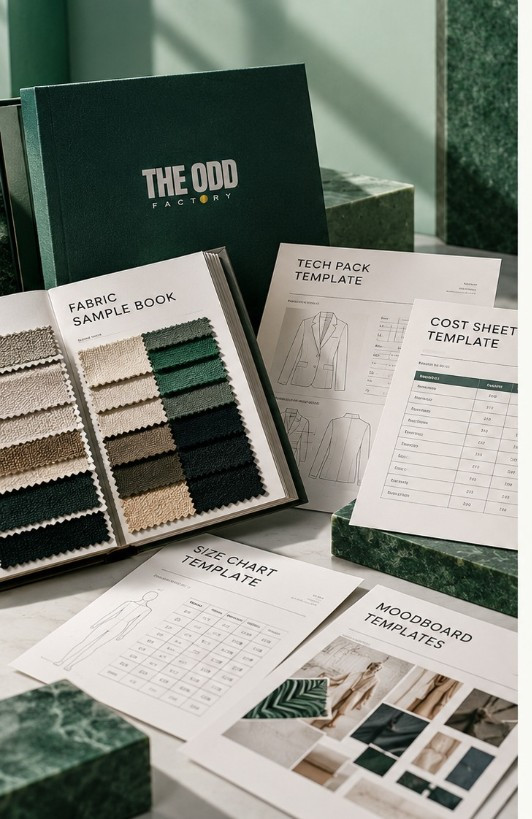
At The ODD Factory, we support fashion brands with fabric and raw material sourcing, tech pack development, pattern making, garment sampling, and manufacturing guidance. For international slow-fashion brands, we also offer small-batch and bulk manufacturing support, with no MOQ on sampling.
If you’re an emerging brand in India and aren’t ready for sampling or manufacturing, our strategic division, The Green Room, can help with collection planning, sourcing, and connecting with suitable manufacturing partners.
Ready to take your fashion idea forward? Explore The ODD Factory’s sampling and manufacturing services or get in touch with our team to discuss your requirements.