
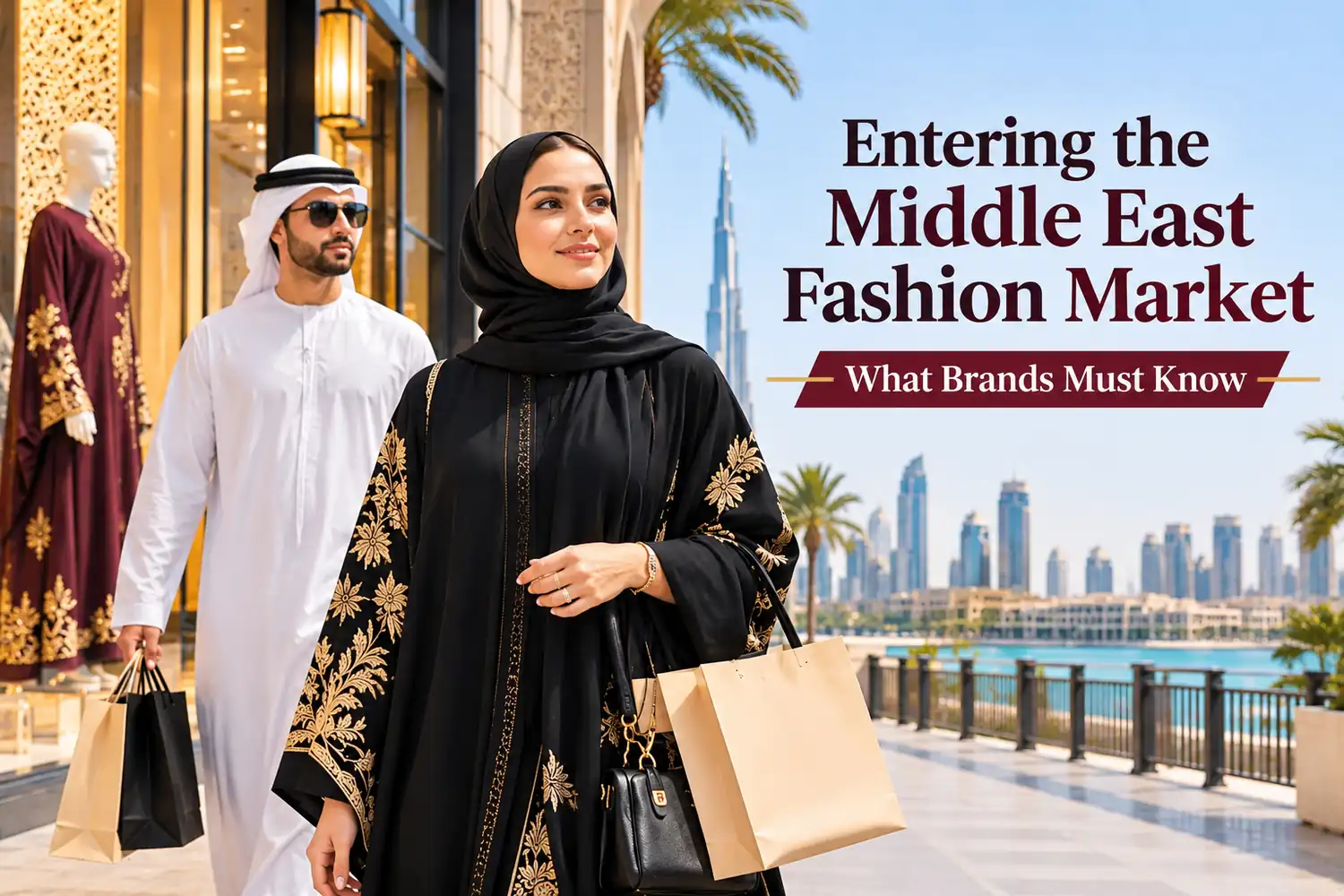
The Middle East offers fashion brands opportunities across luxury, contemporary clothing, and online retail. Entering the region takes more than exporting an existing collection. Brands need to understand local customers, product requirements, and sales channels.
The first step is to treat the region as a group of different markets, not one customer base. This guide focuses on the GCC, a key subregion, rather than treating all Middle Eastern countries alike.
1. Choose Your First Market Carefully
The six Gulf Cooperation Council (GCC) countries are the UAE, Saudi Arabia, Kuwait, Qatar, Bahrain, and Oman. Each has its own customer mix, retail structure, business requirements, and competition.
The UAE can suit brands targeting international shoppers, premium retail and e-commerce. Saudi Arabia offers a large domestic market, with a population of 35.3 million in mid-2024, according to the General Authority for Statistics.
The luxury segment also shows demand. Chalhoub Group reported that the GCC personal luxury market reached US$12.8 billion in 2024, with fashion accounting for 43% of personal luxury spending. This is a luxury-market figure, not the value of the entire regional apparel market.
Before choosing a country, compare target customers, competitors, retail costs, import processes and local partners.
2. Adapt the Collection to Local Customers
Do not assume that all Middle Eastern consumers have the same style preferences. Demand varies by country, age group, income, occasion and personal taste.
Modest fashion is an important category, but it does not mean every customer wants traditional clothing. Contemporary modest wear, occasionwear, resortwear, activewear and everyday essentials can appeal to different segments.
Product choices should reflect local conditions. In many GCC markets, lightweight, breathable fabrics can be practical in warmer months, while layering pieces are useful in heavily air-conditioned indoor spaces. Check fabric performance, opacity, drape, fit and care requirements before finalising a collection.
3. Plan Product Development and Sourcing Before Launch
Before committing to bulk orders, review fabric availability, construction, sizing, sampling costs, lead times and quality standards.
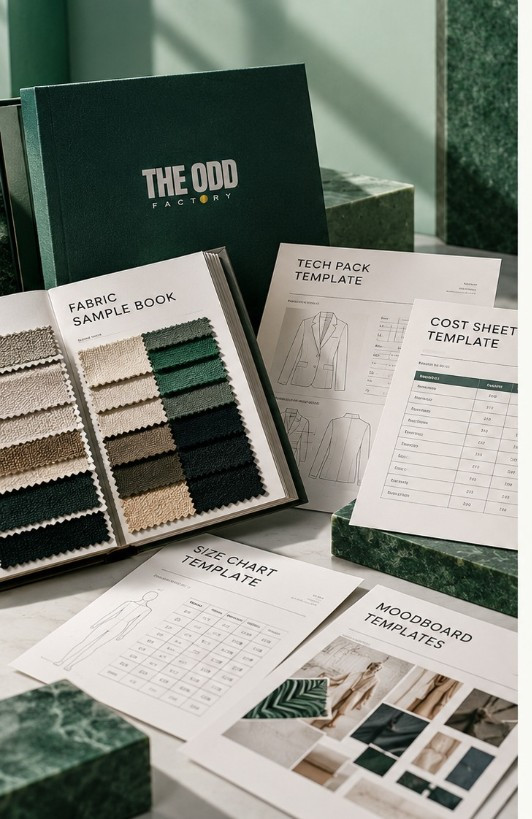
Prepare clear tech packs with measurements, construction details, fabric specifications, trims and finishing instructions. Develop samples and test fit and quality before approving production.
Compare suppliers on fabric quality, minimum order quantities, consistency and lead times. A low unit cost may not be economical if it leads to quality issues, delays or returns.
4. Plan Around the Retail and Cultural Calendar
Ramadan and Eid are important shopping periods for many customers across the GCC. Wedding seasons, national celebrations and holiday travel can also influence demand.
Plan product development, sampling, production and shipping well ahead of each selling period. Do not rely on a last-minute festive capsule or repeat the same campaign every year. Retailers are increasingly focusing on more thoughtful, locally relevant Ramadan activity and customer needs.
Match the calendar to the country, customer segment and product category.
5. Select the Right Sales Channels
Brands can use e-commerce, marketplaces, retail partners, distributors, pop-ups or physical stores. Choose channels based on product, price point and budget.
The UAE offers a strong online opportunity. Its e-commerce market reached AED 42.2 billion in 2025, and apparel and footwear was the largest online category at AED 11.4 billion, according to EZDubai and Euromonitor International.
Review commissions, fulfilment costs, return policies and promotional requirements before choosing a marketplace or retail partner. For direct-to-consumer sales, make sure the website supports local currencies, clear delivery information, suitable payment options and an easy returns process.
6. Check Import and Product Compliance
Do not assume that one set of rules applies across the GCC. Requirements depend on the destination country and product category.
Saudi Arabia has a technical regulation for textile products covering matters such as fibre-composition labelling and product conformity. Authorities also provide a conformity certificate service for textile products. Importers must check the documents required for each shipment. Saudi ZATCA lists a commercial invoice, bill of lading and, where applicable, a certificate of origin among the standard import documents.
The UAE has its own textile product control and conformity requirements. Before shipping, confirm the applicable standards, labels, customs classification, certificates and duties with the relevant authority or an experienced customs broker.
7. Localise Your Marketing
A campaign created for another market may not connect with customers in the GCC. Use Arabic and English where appropriate, work with creators who understand the audience and show products in relevant settings.
Provide clear size guides, fabric details, delivery timelines and return terms. Localisation should continue through customer service after the first purchase.
Need Support Developing Your Fashion Collection?
The Odd Factory supports international fashion brands with design, sourcing, tech packs, bespoke sampling and small-batch garment manufacturing. Its team can help turn a collection concept into production-ready garments, with attention to fabric selection, fit, construction and quality. If you are preparing to enter the Middle East market, explore The Odd Factory’s fashion development and manufacturing services to discuss the support your collection may need.