
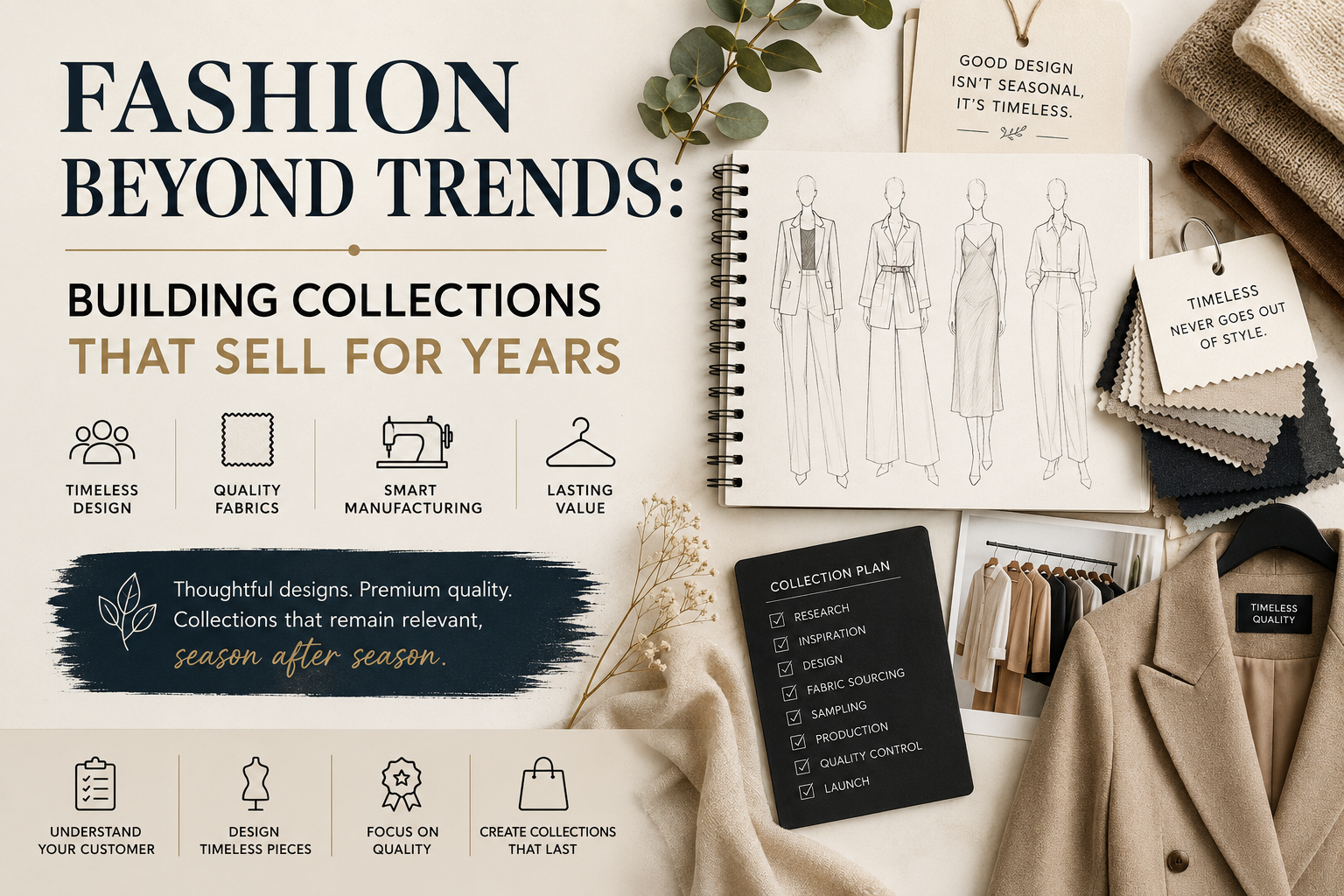
Fashion trends come and go, but successful fashion brands are built on collections that remain relevant season after season. While trend-driven pieces can generate short-term excitement, they often have a limited shelf life and can lead to excess inventory if consumer preferences shift. In contrast, thoughtfully designed collections with timeless appeal continue to generate sales long after the latest trend has faded.
Today’s consumers are also becoming more intentional about their purchases. They are looking for versatile, high-quality garments that offer lasting value rather than clothing that quickly goes out of style. This shift presents a valuable opportunity for fashion brands to move beyond chasing trends and instead focus on creating collections that stand the test of time.
Whether you’re launching a startup label or expanding an established brand, building timeless collections is one of the smartest long-term business strategies.
Why Trend-Driven Collections Can Be Risky
Trends play an important role in fashion, but relying entirely on them can make a business unpredictable. Trends change rapidly, often lasting only a few months before consumers move on to the next style.
Brands that produce large quantities of trend-specific garments may struggle with unsold inventory, markdowns, and shrinking profit margins. Constantly redesigning collections to keep up with fast-changing trends also increases production costs and places additional pressure on product development teams.
Rather than abandoning trends altogether, successful brands use them selectively while maintaining a strong foundation of timeless core products.
The Difference Between Fashion Trends and Timeless Design
Understanding the distinction between trends and timeless design is essential when planning a successful collection.
Trend-Driven Fashion | Timeless Fashion |
Seasonal popularity | Long-term appeal |
Fast-changing styles | Classic silhouettes |
High inventory risk | Consistent demand |
Short product life | Extended selling cycle |
Frequent redesigns | Gradual product evolution |
A balanced collection often includes both seasonal statement pieces and evergreen essentials that customers continue to purchase year after year.
Start With Your Customer, Not the Trend Forecast
The strongest collections begin with a deep understanding of the customer rather than the latest runway trend.
Before sketching new designs, ask questions such as:
- What problems does this garment solve?
- Will customers wear it beyond one season?
- Does it fit into their everyday wardrobe?
- Can it be styled in multiple ways?
- Will it still feel relevant next year?
Designing around customer needs rather than temporary fashion movements leads to stronger product-market fit and greater customer loyalty.
Focus on Timeless Silhouettes
Silhouettes are one of the biggest factors influencing a garment’s longevity.
Classic blazers, tailored trousers, well-fitted shirts, versatile dresses, premium denim, and elevated basics remain in demand because they can be styled across different seasons and occasions.
Timeless silhouettes also allow brands to refresh collections through new fabrics, colors, and finishes without completely redesigning successful products.
Invest in Premium Fabrics
Fabric quality often determines whether a garment becomes a wardrobe staple or a short-term purchase.
Consumers immediately notice how a fabric feels, drapes, and performs after repeated wear and washing. Investing in premium materials improves customer satisfaction while reinforcing the brand’s quality positioning.
When sourcing fabrics, consider factors such as durability, comfort, breathability, color retention, sustainability, ease of maintenance.
Strong supplier relationships also make it easier to maintain fabric consistency across future collections.
Build Around Signature Products
Many successful fashion brands are recognized for a few signature products that define their identity.
These hero products become the foundation of the business and generate consistent revenue while seasonal collections create additional excitement.
Examples include:
- A perfectly tailored blazer
- A signature oversized shirt
- Premium denim
- A versatile co-ord set
- A timeless linen collection
Instead of constantly reinventing your catalogue, refine and improve these best-selling products over time.
Design With Manufacturing in Mind
Creative ideas must also be commercially viable.
Designers should work closely with manufacturers during the development process to ensure garments can be produced consistently without compromising quality.
Considering production from the beginning helps brands reduce manufacturing errors, improve costing accuracy, minimize fabric wastage, maintain consistent quality, shorten production timelines.
A strong collaboration between design and manufacturing creates collections that are both beautiful and scalable.
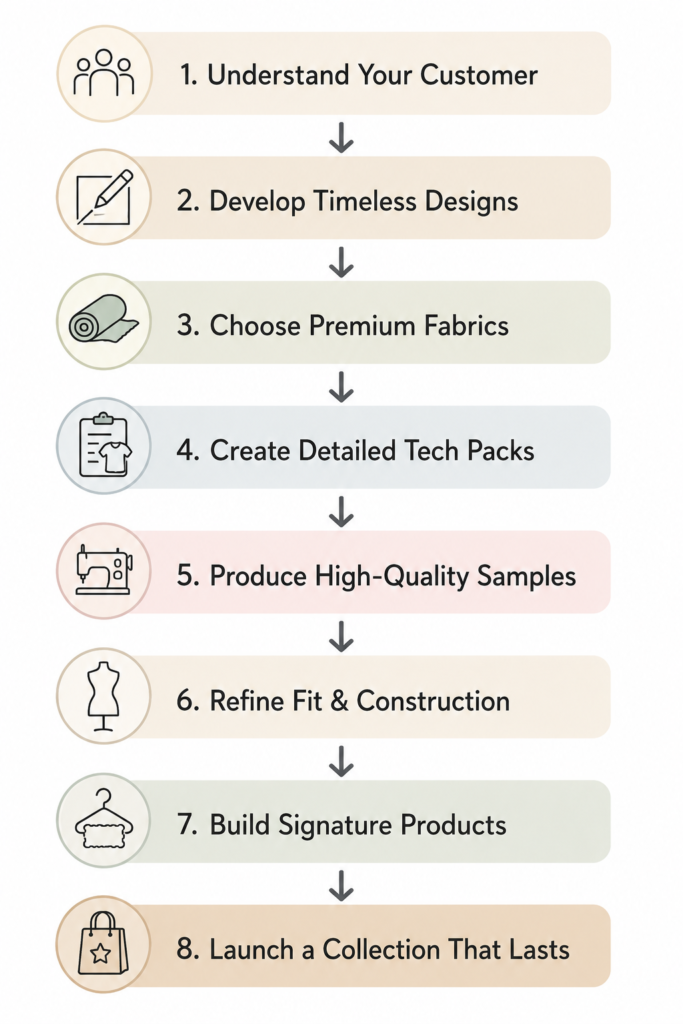
Diagram: Building a Long-Lasting Collection
Think in Collections, Not Individual Pieces
Successful brands rarely design garments in isolation.
Instead, each product should complement the others, allowing customers to mix and match multiple pieces within the same collection.
A cohesive collection offers several advantages stronger visual identity, higher average order values, easier merchandising, better storytelling, greater customer engagement.
When products work together, customers are more likely to purchase complete looks rather than individual items.
Sustainability and Longevity Go Hand in Hand
Designing products that remain relevant for years naturally supports more sustainable fashion practices.
Long-lasting garments reduce unnecessary consumption, decrease textile waste, and encourage thoughtful purchasing habits.
Brands that prioritize quality, durability, and timeless design are increasingly resonating with modern consumers who value responsible fashion choices.
Rather than producing more products each season, many brands are focusing on producing better products.
Why Collection Planning Matters
Timeless collections rarely happen by accident.
Successful brands invest significant time in:
- Market research
- Trend evaluation
- Consumer analysis
- Fabric sourcing
- Sampling
- Costing
- Production planning
Every stage contributes to creating products that perform well commercially while remaining true to the brand’s identity.
Strategic planning also reduces costly design changes later in the production process.
Ready to Build Collections That Last?
At The ODD Factory, we help fashion brands move beyond trend-driven production through strategic collection planning, premium sourcing, product development, and end-to-end manufacturing support.
Whether you’re developing your first collection or refining an existing one, our team provides the tools and expertise needed to create products with long-term commercial value.
Explore our End-to-End Collection Development Vendors List to connect with trusted manufacturers, fabric suppliers, and industry experts who can help bring your vision to life.
Final Thoughts
Fashion trends will always influence the industry, but they should not define your entire business.
Brands that consistently succeed are those that balance creativity with strategy, innovation with quality, and seasonal inspiration with timeless design.
By understanding your customers, investing in premium materials, planning collections carefully, and partnering with the right manufacturing experts, you can build products that remain relevant for years instead of just one season.
In today’s competitive market, longevity is becoming one of the strongest competitive advantages a fashion brand can have.