
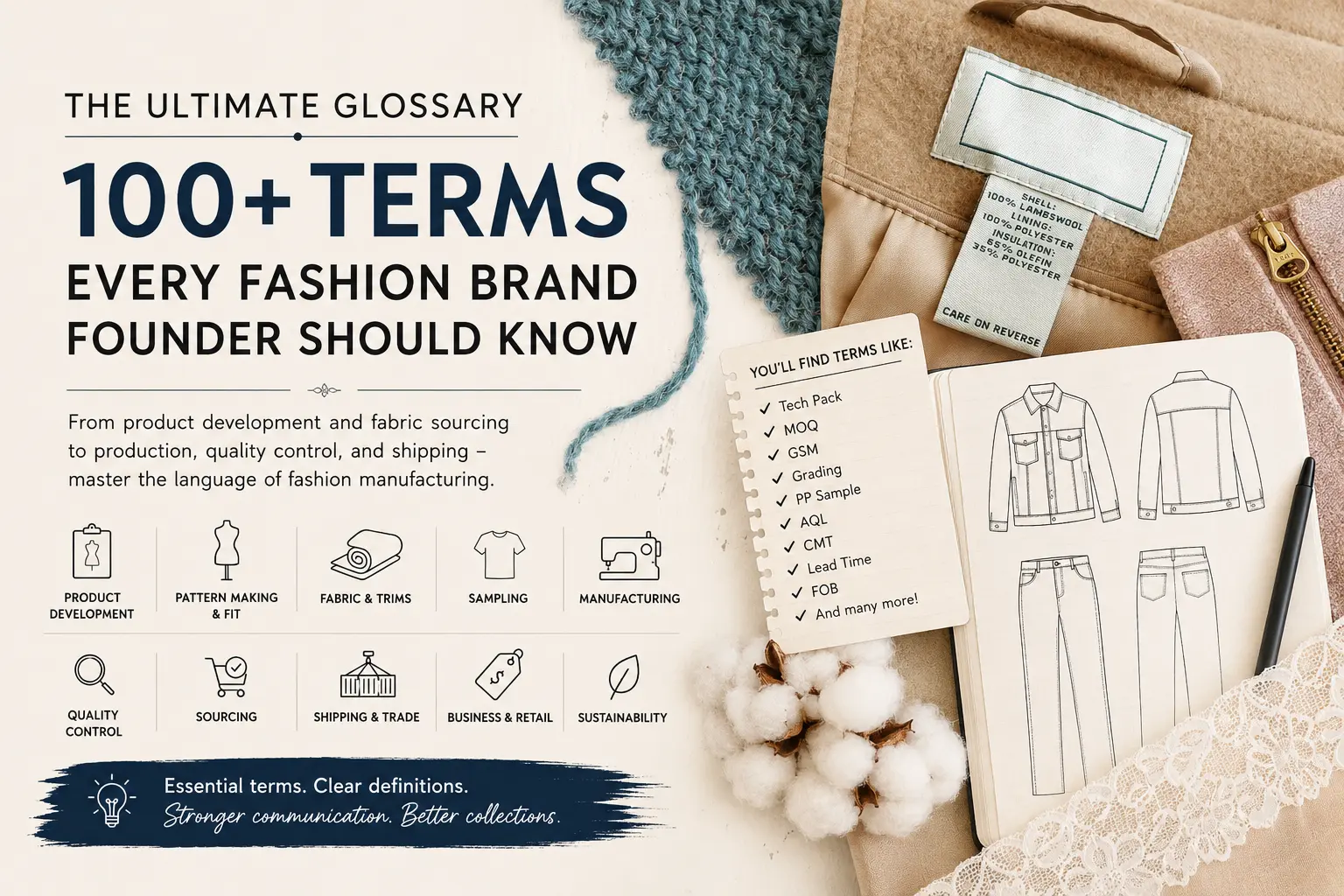
The fashion industry has its own language, and for new founders, designers, and entrepreneurs, it can often feel overwhelming. From product development and sourcing to production, quality control, and shipping, understanding industry terminology is essential for communicating effectively with manufacturers and suppliers.
Whether you’re launching your first collection or scaling an established brand, this glossary will help you confidently navigate the world of fashion manufacturing and apparel production.
Product Development Terms
Product development is the foundation of every successful fashion collection. These terms are commonly used during the planning, design, and preparation stages before a garment enters production, helping brands communicate effectively with designers, manufacturers, and suppliers.
- Tech Pack: A detailed document containing all garment specifications required for production.
- BOM (Bill of Materials): A list of all fabrics, trims, labels, and materials used in a garment.
- Flat Sketch: A technical drawing showing the garment’s front and back views.
- Specification Sheet: A document outlining garment measurements and construction details.
- Prototype: The first version of a garment created for evaluation.
- Design Brief: A document outlining the design concept and requirements.
- Collection Development: The process of planning and creating an entire fashion collection.
- Line Sheet: A sales document showcasing products, styles, and pricing.
- Mood Board: A visual collection of inspirations, colors, fabrics, and concepts.
- Colorway: Different color variations of the same garment style.
Pattern Making & Fit Terms
Pattern making transforms creative ideas into production-ready garments. Understanding these terms is essential for ensuring proper fit, accurate sizing, and consistency across all sizes within a collection. Accurate sizing is critical for customer satisfaction and reducing returns. Using a standardized size framework can help brands maintain consistency across collections. Explore our Size Chart Templates Bundle to streamline your fit and grading process.
- Pattern: A template used to cut garment pieces from fabric.
- Pattern Making: The process of creating garment templates.
- Grading: Scaling a pattern into multiple sizes.
- Base Size: The standard size used for developing patterns.
- Size Set: Samples produced in multiple sizes for fit verification.
- Marker: Layout used to position pattern pieces on fabric before cutting.
- Fit Sample: A sample used specifically for fit testing.
- Ease: Additional space added for comfort and movement.
- Block Pattern: A basic garment template used for future styles.
- Measurement Chart: Detailed garment dimensions for production.
Sampling Terms
Sampling is one of the most important stages of garment production because it allows brands to test designs before committing to bulk manufacturing. These terms are frequently used when developing prototypes, fit samples, and production approvals.
- Proto Sample: The first physical version of a garment.
- Fit Sample: A sample created to evaluate fit and proportions.
- Development Sample: A sample used during product development.
- Salesman Sample: A sample used by sales teams for marketing and orders.
- Counter Sample: An approved sample retained as a production reference.
- PP Sample: A pre-production sample approved before bulk manufacturing.
- TOP Sample: A Top of Production sample taken from the production line.
- Approval Sample: A sample signed off by the client.
- Mock-Up Sample: A sample used to visualize design placement.
- Gold Seal Sample: The final approved sample used as a production benchmark.
Fabric Terms
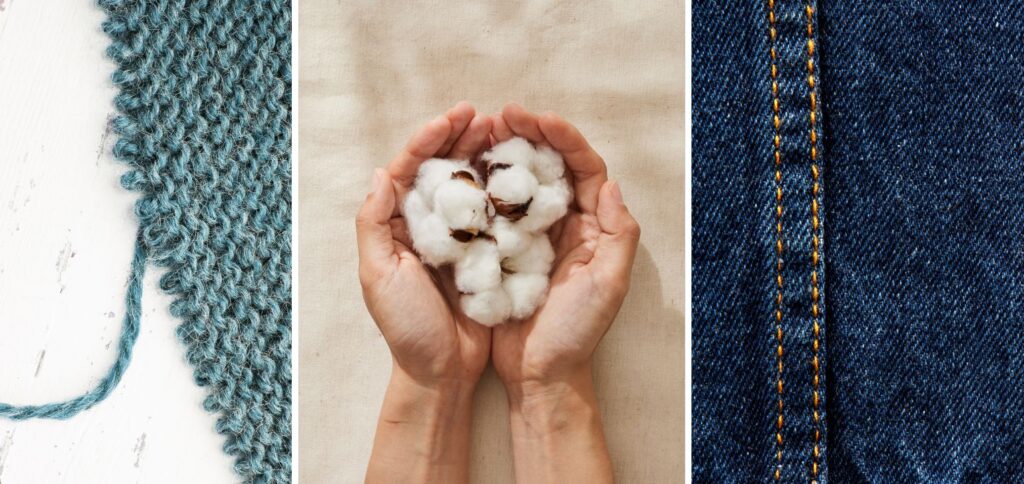
Fabric selection directly impacts the quality, appearance, comfort, and durability of a garment. These fabric-related terms help founders communicate better with textile suppliers and make informed sourcing decisions.
- GSM: Grams per square meter indicating fabric weight.
- Fabric Composition: The fiber content of a fabric.
- Knit Fabric: Fabric made through interlocking yarn loops.
- Woven Fabric: Fabric made by weaving yarns together.
- Blend Fabric: Fabric made from multiple fiber types.
- Stretch Fabric: Fabric with elasticity.
- Selvage: The finished edge of woven fabric.
- Fabric Width: The usable width of a fabric roll.
- Fabric Shrinkage: The percentage of size reduction after washing.
- Fabric Yield: The amount of fabric required per garment.
Garment Construction Terms
Garment construction refers to the methods and techniques used to assemble clothing. Understanding these terms helps founders evaluate quality and communicate design details effectively.
- Seam: The line where two fabric pieces are joined.
- Seam Allowance: Extra fabric beyond the stitching line.
- Overlock Stitch: A stitch used to secure fabric edges.
- Top Stitch: Visible stitching on the garment exterior.
- Hem: The finished edge of a garment.
- Dart: A fold sewn into fabric to create shape.
- Pleat: A fold used for design or volume.
- Yoke: A garment panel supporting structure.
- Binding: A fabric strip used to finish edges.
- Facing: An internal fabric piece used to finish openings.
Trims & Accessories Terms
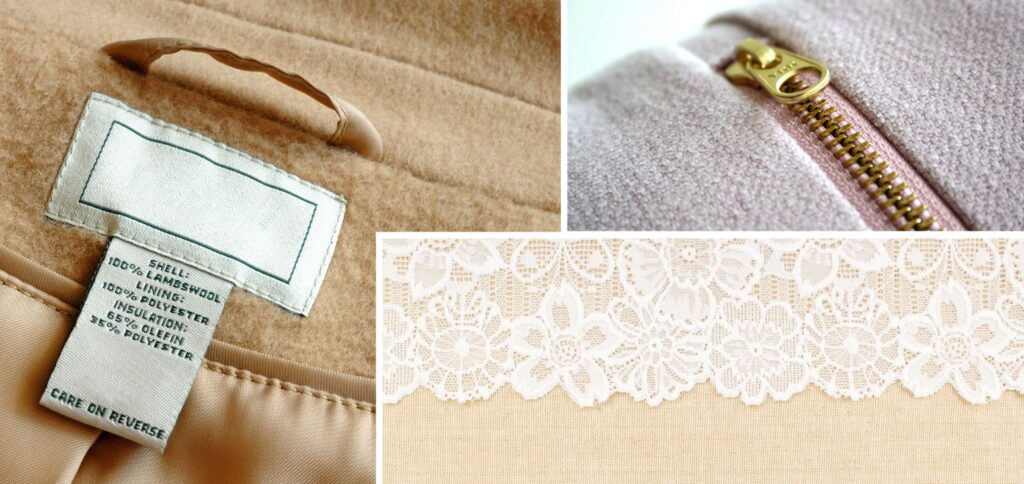
Trims and accessories may seem like small details, but they significantly influence a garment’s functionality, aesthetics, and perceived value.
- Trim: Any accessory added to a garment besides fabric.
- Main Label: The brand identification label.
- Care Label: Label containing washing instructions.
- Hang Tag: Product tag attached before sale.
- Zipper: A fastening device using interlocking teeth.
- Rivet: A metal fastener used for reinforcement.
- Snap Button: A press-fastening button system.
- Drawcord: An adjustable cord used in garments.
- Elastic: Stretchable material used for garment fit.
- Toggle: A fastening accessory used with cords.
Manufacturing Terms
Once a garment moves into production, manufacturers use specific terminology related to costs, production planning, capacity, and order management. Our End-to-End Collection Development Vendors List helps fashion startups connect with trusted industry partners.
- MOQ: Minimum Order Quantity required by a supplier.
- Production Run: Quantity of garments manufactured in a batch.
- Bulk Production: Large-scale manufacturing after approvals.
- CMT: Cut, Make, Trim production model.
- FPP: First Production Piece manufactured during bulk production.
- Lead Time: Total time required to complete production.
- Production Capacity: Maximum output a factory can produce.
- Assembly Line: Sequential manufacturing process.
- SMV: Standard Minute Value used for costing.
- Capacity Planning: Forecasting factory production ability.
Quality Control Terms
Quality control ensures garments meet required standards before reaching customers.
- QC: Quality Control inspection process.
- QA: Quality Assurance system for maintaining standards.
- AQL: Acceptable Quality Level used during inspections.
- Defect: An imperfection found in a product.
- Inline Inspection: Inspection during production.
- Final Inspection: Inspection before shipment.
- Needle Detection: Process to identify broken needles in garments.
- Shade Variation: Color differences between garments.
- Rework: Correcting production defects.
- Pass Rate: Percentage of products meeting standards.
Luxury Garment Construction Terms
Luxury garments often feature advanced craftsmanship techniques that distinguish them from mass-produced apparel.
- Hand Stitching: Stitching completed manually by artisans.
- Pick Stitching: Decorative hand-sewn stitching detail.
- Canvas Construction: Internal structure used in tailored jackets.
- Floating Canvas: Premium tailoring construction technique.
- Bespoke Tailoring: Fully customized garment construction.
- Made-to-Measure: Garment customized using standard patterns.
- Horn Buttons: Buttons made from natural horn material.
- Cupro Lining: Premium breathable lining fabric.
- Hand Finished Hem: Hem completed manually.
- Artisan Finish: Specialized handcrafted detailing.
Production Costing Terms
Costing terminology helps founders understand pricing, profitability, and production budgets.
- CM Cost: Cut and Make cost only.
- FOB Cost: Cost including delivery to shipping port.
- Landed Cost: Total product cost after importation.
- Cost Sheet: Detailed breakdown of production expenses.
- Material Cost: Cost of fabrics and trims.
- Labor Cost: Cost of manufacturing labor.
- Overhead Cost: Factory operational expenses.
- Cost Per Unit (CPU): Production cost per garment.
- Gross Margin: Revenue minus product cost.
- Net Profit Margin: Final profit after expenses.
Fashion manufacturing becomes far less intimidating when you understand the terminology used throughout the industry. Whether you’re discussing tech packs with designers, negotiating MOQs with suppliers, reviewing AQL reports, or planning bulk production with manufacturers, knowing these terms helps you communicate confidently and make better business decisions.