The fashion industry is undergoing a significant transformation. For years, fast fashion dominated the global market with rapid production cycles, trend-driven collections, and low-cost consumption. Brands focused on speed, volume, and constant newness to keep consumers engaged.
Today, however, both consumers and businesses are beginning to rethink this model.
Modern buyers are becoming more conscious about quality, sustainability, transparency, and emotional connection. They are asking deeper questions about where garments come from, how they are made, and what values a brand represents. As a result, the industry is moving away from purely trend-driven fashion toward something more intentional: purpose-led brand building.
For emerging fashion brands and manufacturers alike, this shift is not temporary. It is reshaping the future of fashion.
What Is Fast Fashion Thinking?
Fast fashion thinking is built around speed and short-term consumer demand. The model focuses on producing high volumes of clothing quickly and affordably in order to capitalize on rapidly changing trends.
In this system:
Collections change frequently, production cycles are compressed, trends are prioritized over longevity, low pricing drives impulse purchases, and quantity often outweighs quality.
While this approach created massive commercial growth for many brands, it also introduced major challenges for the industry.
These include several major industry concerns that continue to affect both businesses and consumers.
| Fast Fashion Challenges | Impact on Brands and Consumers |
| Overproduction | Excess inventory and waste |
| Short product lifespan | Lower customer retention |
| Trend dependency | Weak long-term brand identity |
| Price competition | Reduced margins and perceived value |
| Environmental concerns | Consumer trust issues |
Consumers today are far more informed than they were a decade ago. Many are now prioritizing thoughtful purchases over excessive consumption.
The Rise of Purpose-Led Fashion Brands
Purpose-led brands are built around values, identity, and long-term vision rather than just seasonal trends.
These brands focus on meaningful storytelling, responsible production, quality craftsmanship, emotional connection with consumers, brand transparency, and sustainable growth.
Instead of constantly asking, “What trend should we follow next?” purpose-led brands ask:
“What do we stand for, and why should consumers connect with us?”
This shift creates stronger emotional engagement and deeper customer loyalty.
Fast Fashion vs Purpose-Led Brand Building
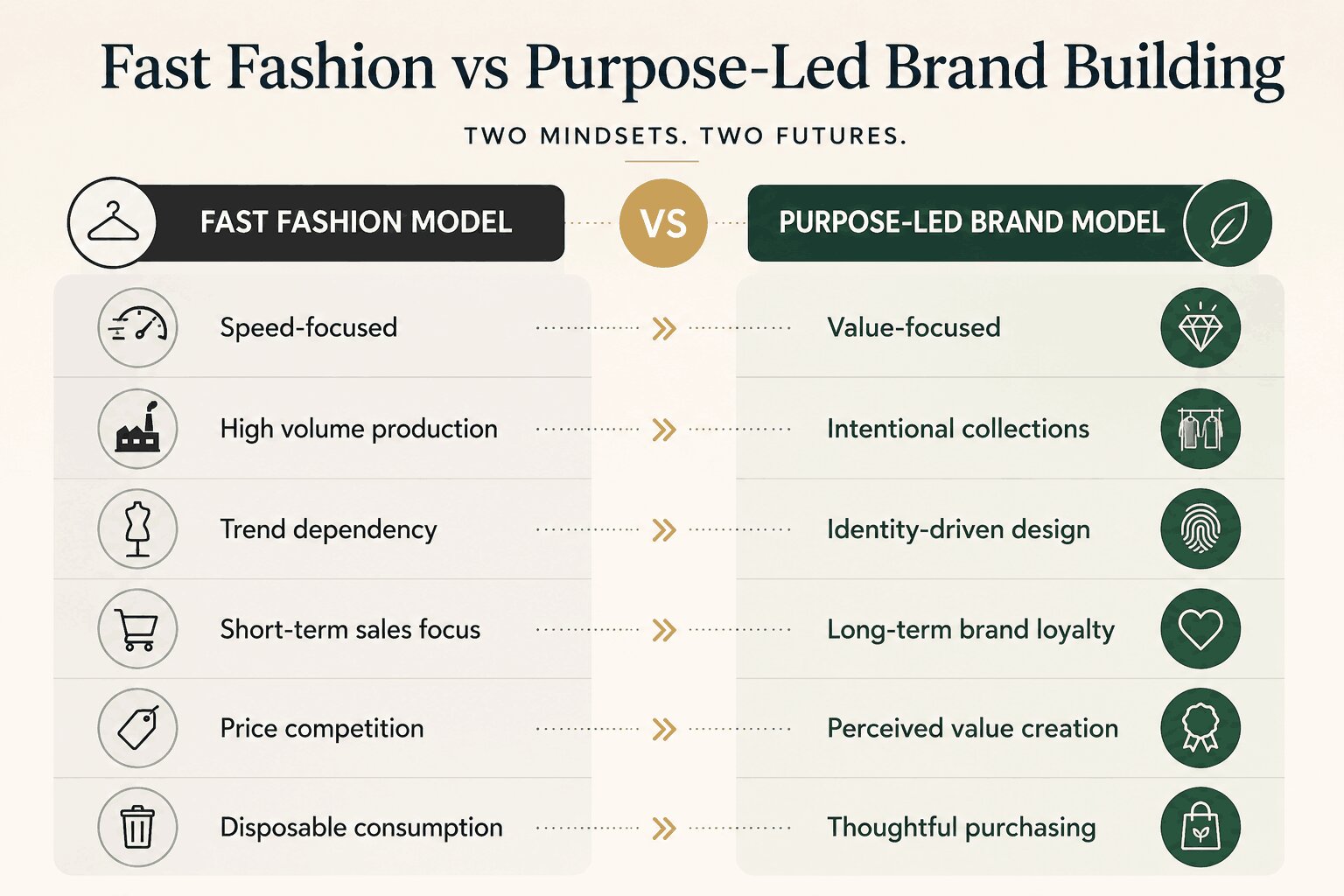
Purpose-led brands are not necessarily slower in growth. In many cases, they build stronger communities and more sustainable business models because consumers trust them more deeply.
Why Consumers Are Shifting Toward Purpose
Consumer behavior has evolved dramatically in recent years.
Modern audiences are no longer influenced only by aesthetics or price. They are also influenced by brand ethics, production transparency, sustainability practices, cultural relevance, emotional storytelling, and product quality and longevity.
Social media has accelerated this change. Consumers now have access to information about sourcing, manufacturing, and brand values almost instantly.
As a result, brands that lack authenticity often struggle to maintain long-term engagement.
Purpose-led brands, however, create stronger emotional resonance because they represent something beyond products.
Why Purpose-Led Brands Build Stronger Loyalty
One of the biggest advantages of purpose-led branding is customer retention.
Consumers are more likely to remain loyal to brands that reflect their values, communicate authentically, offer consistency in quality and messaging, and build emotional connection.
A purpose-led brand becomes more than a label. It becomes part of a consumer’s identity.
This emotional alignment increases:
- Repeat purchases
- Word-of-mouth marketing
- Social engagement
- Brand advocacy
In many cases, consumers willingly pay premium prices when they feel connected to a brand’s mission and story.
The Role of Manufacturers in This Shift
Manufacturers play a much larger role in purpose-led fashion than many people realize.
Today’s brands expect production partners who understand sustainable sourcing, quality control systems, ethical production practices, flexible production planning, small-batch manufacturing, and transparency across the supply chain.
Manufacturers are no longer just vendors. They are strategic collaborators helping brands bring their values to life.
This is why strong vendor ecosystems and reliable sourcing networks have become critical for modern fashion businesses.
Why Storytelling Matters More Than Ever
Purpose without communication is ineffective.
Modern fashion brands must clearly communicate:
- Their mission
- Their production philosophy
- Their sourcing process
- Their inspiration and identity
Storytelling helps consumers understand why the brand exists beyond selling products.
This is especially important in competitive markets where aesthetics alone are no longer enough to differentiate a business.
Narrative-driven brands create stronger recall because consumers remember stories more than products.
What This Means for Fashion Startups
For emerging brands, this shift presents a major opportunity.
Startups no longer need to compete purely on volume or low pricing. Instead, they can build niche communities, focus on strong brand identity, prioritize quality over quantity, develop intentional collections, and create meaningful customer relationships.
Purpose-led thinking allows smaller brands to stand out even in crowded markets.
Consumers increasingly value authenticity over scale.
Final Thoughts
The fashion industry is moving beyond speed-driven consumption toward deeper connection, quality, and intention.
Purpose-led brand building is not simply a trend. It is a response to changing consumer expectations and evolving industry realities.
Brands that succeed in the future will not only create visually appealing products. They will build trust, tell meaningful stories, and align their operations with values consumers genuinely care about.
Fast fashion focused on selling more.
Purpose-led fashion focuses on building something that lasts.
And in today’s market, longevity, authenticity, and emotional connection are becoming the true drivers of brand growth.
Ready to Build a More Purpose-Led Fashion Brand?
At The ODD Factory, we help emerging and growing fashion brands move beyond trend-driven thinking through end-to-end collection development, vendor sourcing support, sustainable production guidance, strategic fashion consulting, and quality-focused manufacturing systems.
Whether you’re building your first collection or scaling an existing label, our ecosystem is designed to help brands grow with clarity, structure, and purpose.
👉 Explore our services and development resources:
https://theoddfactory.com/brand-packages/
Build beyond trends. Build with intention.