
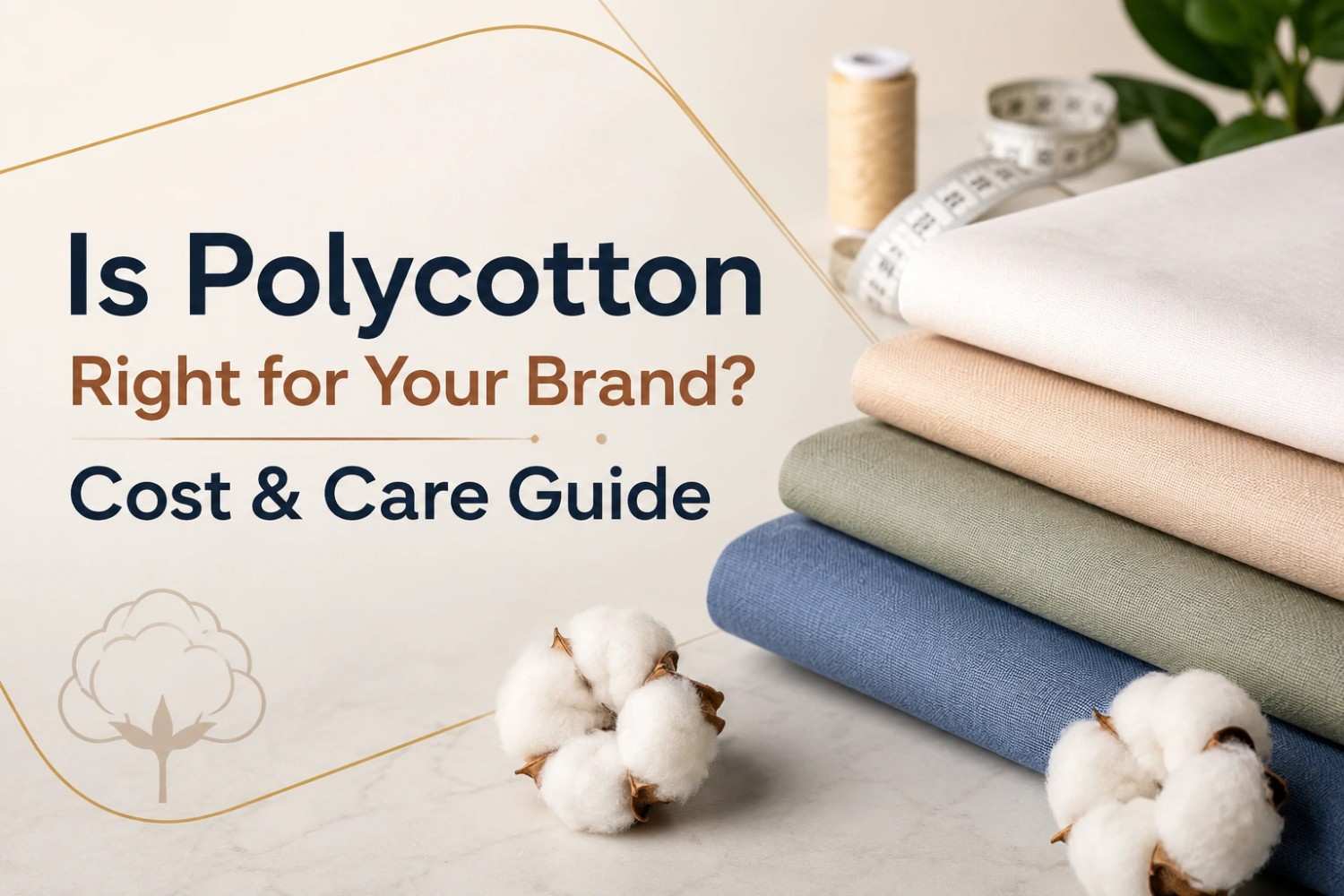
Polycotton, a blend of cotton and polyester fibers, is one of the most common fabric choices for apparel and uniform brands, but the right ratio and use case depend on what you are manufacturing. This breaks down where polycotton performs, where it creates problems, and what it actually costs once dyeing, printing, and returns are factored in, not just price per meter.
What Is Polycotton?
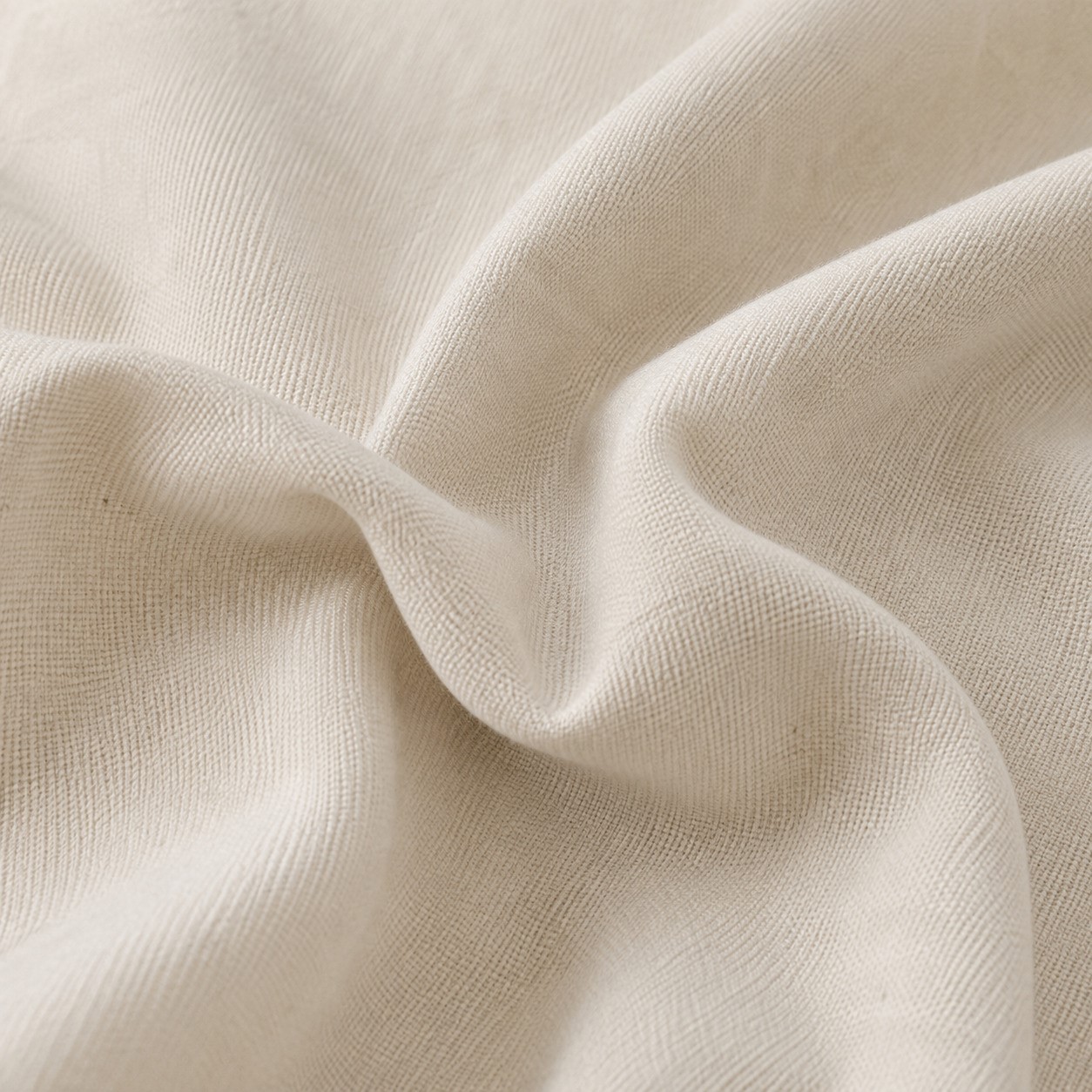 Polycotton is made by spinning cotton and polyester fibers together into a single yarn rather than layering two materials. Cotton brings softness and breathability; polyester brings strength, wrinkle resistance, and lower cost. Where it lands between the two, closer to cotton or closer to polyester, depends entirely on the ratio used.
Blend Ratios and Weight
Two variables decide how polycotton behaves: the ratio of polyester to cotton, and the fabric weight in GSM (grams per square meter). Ratio gets most of the attention, but GSM matters just as much. A 50/50 blend at 120 GSM feels light and almost sheer, while the same ratio at 160 to 180 GSM feels substantial and holds shape. Two suppliers can quote “the same polycotton” at very different weights, so always ask for GSM alongside ratio.
Blend Ratio (poly/cotton) | Character | Best For | Typical GSM |
65/35 | Wrinkle-resistant, holds shape, strong color retention | Uniforms, workwear | 190-260 |
50/50 | Balanced softness and durability | Everyday apparel, streetwear tees | 140-180 |
80/20 | Cheap, tough, can feel papery | Low-cost basics, linings | 180-220 |
Where It Performs and Where It Struggles
Where it performs – Polycotton shrinks less, resists creasing without ironing, and survives commercial laundering better than 100% cotton, which is why hospitality uniforms and workwear lean on it heavily. It also holds color well across repeated commercial washing, and its dimensional stability makes it easier to maintain consistent sizing across production runs, a real advantage for brands running standardized uniform programs at scale.
Where it struggles – Breathability is the main weak point: cotton absorbs roughly 8% of its weight in moisture, polyester under 1%. Higher-polyester blends can feel clammy in heavy sweat, which matters for activewear and comfort-marketed apparel. It also drapes stiffer, so premium loungewear usually still calls for higher cotton content. Some polycotton blends add a small percentage of spandex or elastane for stretch, common in activewear and fitted garments; that third fiber degrades faster under high heat than either cotton or polyester, so it changes the care instructions too.
The Cost Math Brands Often Miss
Fabric cost per meter is the easy comparison, and polycotton usually wins it. Part of that price advantage is structural: polyester is the world’s most-produced fiber, so supply stays abundant, and prices stay comparatively stable, while cotton is an agricultural commodity that swings with weather and harvest.
1. Dyeing Cost
What gets missed beyond raw cost is dyeing cost. Cotton takes reactive dye under alkaline conditions; polyester disperses dye at higher temperature under acidic conditions. An even, colorfast result across a true blend most often needs both dye classes run as a separate two-step process, adding cost, energy, and lead time a pure cotton or polyester order does not carry, and raising the risk of shade variation between lots.
2. Printing Cost
Printing has its own quirk. Sublimation and heat-transfer prints need high polyester content to bond properly, so a 50/50 or lower blend prints duller and fades faster under the same design. Brands leaning on bold, saturated prints need a higher polyester ratio even where softness would argue for less.
3. Minimum Order Quantity
MOQ is the other cost variable brands underestimate. Custom ratios, specific GSM, or piece-dyed colors often carry higher MOQs than stock polycotton, since mills need a minimum run to justify a dye lot. If your order volume is small, sourcing from a supplier’s existing stock blend is usually cheaper than specifying a custom one, even if the stock option is not a perfect match.
Garment Care and Your Return Rate
Polycotton needs less care than cotton overall: it tumble dries fast, resists shrinkage, and rarely needs ironing. But higher-polyester blends pill more, especially at underarms and inner thighs, because synthetic fibers don’t break off the way natural fibers do; they accumulate on the surface instead.
Pilling complaints tend to surface months after purchase, well outside a typical return window, making it a warranty and reputation issue rather than just a fabric one. Recommending the right wash temperature on the care label (cold to warm, never hot, above 50% cotton) reduces pilling complaints and protects margin. Bleach is worth flagging separately: chlorine bleach can yellow or weaken the polyester component over repeated use, so oxygen-based stain removers are the safer default to specify on the care label.
Frequently Asked Questions
Is polycotton good quality for clothing brands?
Yes, if the ratio and GSM match the product. A well-made 50/50 or 65/35 blend performs reliably for workwear, uniforms, and everyday apparel.
Does polycotton shrink after washing?
Less than 100% cotton. Polyester stabilizes the fabric, so shrinkage stays minimal on cold or warm washes.
Is polycotton cheaper than 100% cotton?
The raw fabric costs less per meter, but two-step dyeing (needed for an even, colorfast shade) narrows that gap.
Does polycotton shed microplastics when washed?
Yes, tiny synthetic fibers release during machine washing. A wash bag or filter reduces the amount but doesn’t eliminate it.
Can polycotton be recycled?
Not easily. Cotton and polyester are hard to separate mechanically at scale, so GRS-certified recycled polyester blends are the closest practical alternative.
Is polycotton sustainable or organic or for premium and luxury fashion brands?
If you’re positioning yourself as a premium, quality-focused, organic or sustainable brand, do not use polycotton as it is cheap and not sustainable. This fabric works for brands who sell in mass volumes at very low pricing or who want to position themselves as affordable. Fast Fashion Brands use polycotton and other poly bases to compromise cost for quality. There are other sustainable blends that your brand can opt for, which are not only sustainable but also organic and economical to use.
Not sure which blend fits your brand? Get in touch with The ODD Factory for sourcing and manufacturing guidance built around slow, sustainable fashion.