

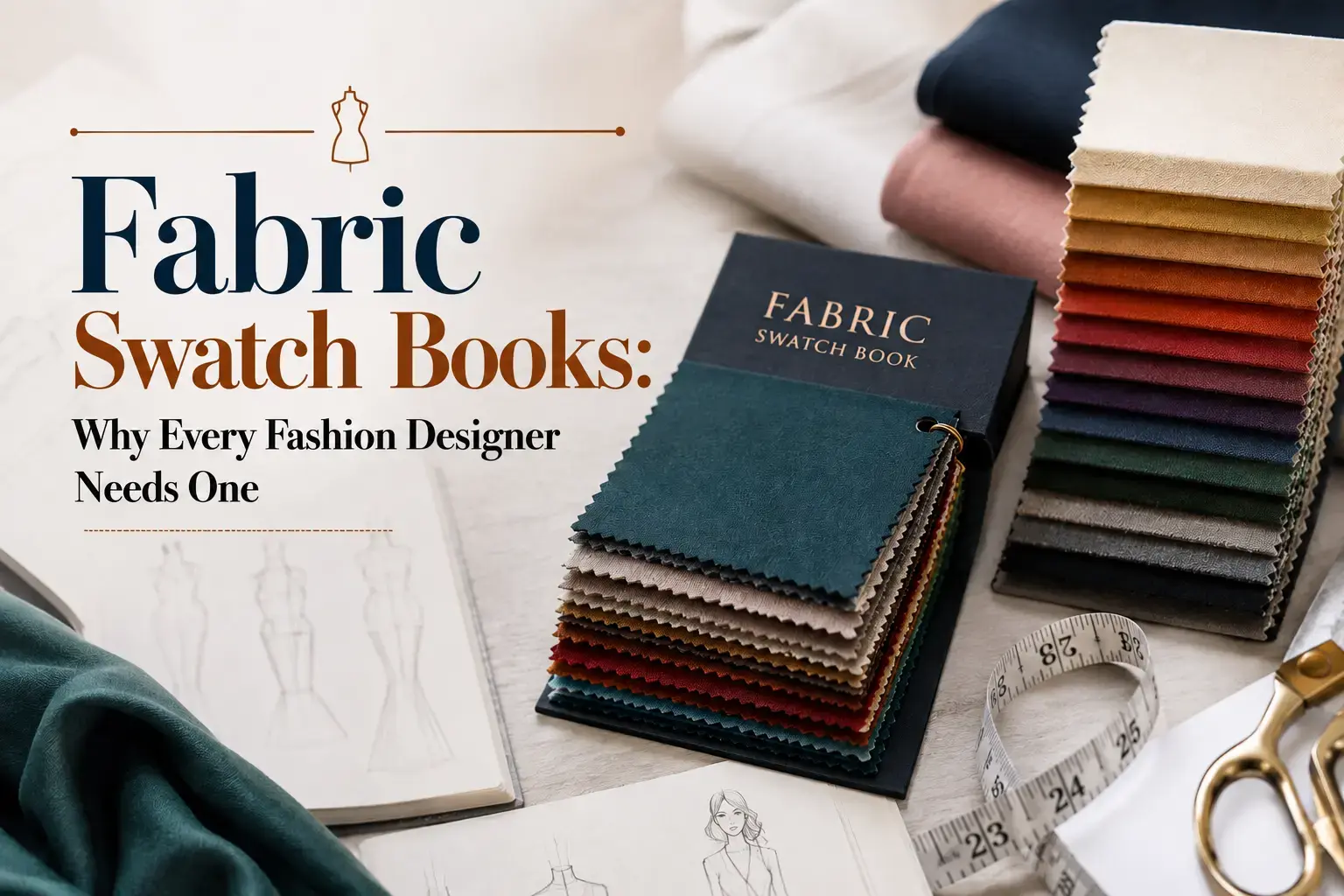
Scroll through a hundred fabric photos online, and you will still know less than you would from ten seconds of running the actual cloth between your fingers. Colour on a screen shifts with every device; weight, drape, and hand-feel don’t. That’s the entire argument for keeping a professional fabric swatch book in your studio: it turns an abstract idea of “fabric” into something you can see, touch, and compare in real time.
What Is a Fabric Swatch Book?
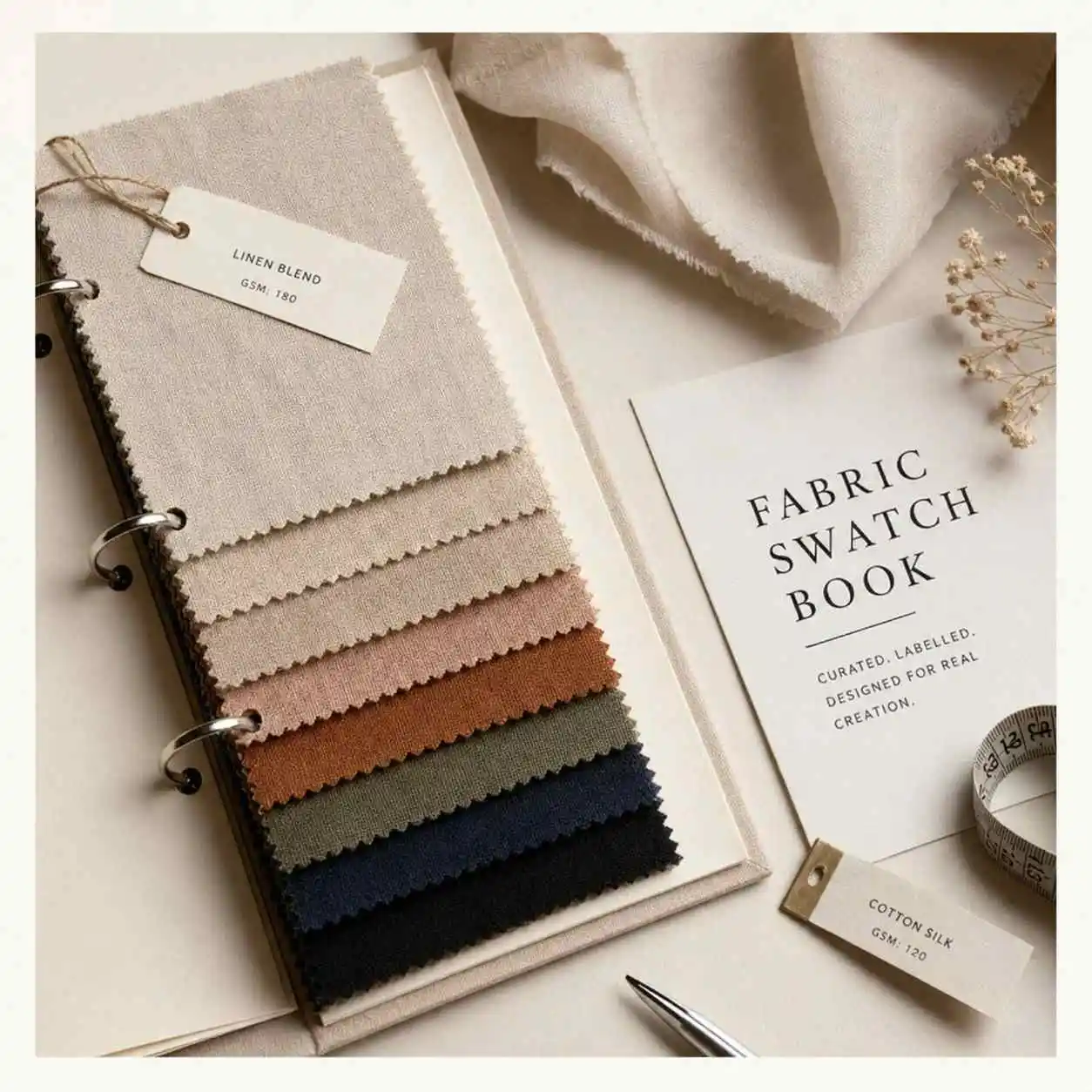 A fabric swatch book is a curated, labelled collection of actual fabric cuttings, organised by fibre, weight, finish, or collection, that a designer keeps as a working reference. Each swatch is usually tagged with details like fibre content, GSM (grams per square metre), supplier name, price, and care instructions. Think of it as a physical (or digital) library that sits between inspiration and production: it’s where a mood board’s ideas get tested against what materials can actually do.
For fashion students, it’s a learning tool. For working designers, it’s closer to a decision-making system, one that saves time, money, and a lot of back-and-forth with suppliers.
Why Every Fashion Designer Needs One
1. It Turns Guesswork Into Informed Decisions
Photographs and digital colour swatches can never fully capture drape, stretch, or texture. Fabric swatches for fashion designers exist precisely to close that gap. You can feel whether a cotton poplin has enough body for structured tailoring, or whether a viscose blend will cling in a way that suits (or ruins) a silhouette. This tactile confirmation prevents costly surprises further down the sampling line, when a fabric that looked perfect on a supplier’s catalogue turns out to behave completely differently once cut and sewn.
2. It Speeds Up Sourcing and Communication
Sourcing is rarely a single conversation. Designers go back and forth with mills, agents, and manufacturers, often across time zones. A well-kept fabric sample booklet shortens that loop considerably. Instead of describing a fabric in words (“a mid-weight, slightly textured cotton, off-white”), you can reference an exact swatch by code and get an accurate quote or a matching sample almost immediately. This is especially valuable for small and independent labels, where every sourcing delay directly affects production timelines.
3. It Keeps a Growing Collection Organised
As a brand grows, so does its material library: different suppliers, seasons, and product categories all add new swatches. Grouping them by fibre type, weight, or collection keeps the archive usable instead of becoming a drawer of loose scraps. Many designers also photograph or scan each page, so the same reference travels with them to meetings or can be shared instantly with a client overseas.
4. It Doubles as a Quality Control Record
A proper swatch entry isn’t just a pretty scrap of cloth. It’s a mini test report. Designers commonly note:
- Shrinkage: wash and measure a sample against the original before committing to a fabric for a full production run
- Colourfastness: a simple rub test shows whether dye bleeds onto lighter fabrics
- Drape and stretch: hang or pull the swatch along the grain and bias to see how it will actually sit on the body
Recording this information at the swatch stage means fewer surprises when the same fabric arrives in bulk, and it gives quality control a documented baseline to check against.
5. It Builds Trust With Manufacturers and Clients
When a designer, buyer, and manufacturer are all looking at the identical physical swatch, there’s no ambiguity about shade, texture, or finish- something descriptions and screen colours simply can’t guarantee. A swatch book becomes a shared reference point that keeps sourcing conversations accurate and professional, which matters even more when working with manufacturing partners across different countries.
6. It Supports Sustainable, Traceable Sourcing
For brands building around sustainability, a swatch book is also a traceability tool. Noting the supplier, fibre origin, and any certifications alongside each swatch makes it far easier to track which materials came from where, useful for everything from supplier audits to communicating a brand’s sourcing story to customers.
What to Include in Every Swatch Entry
A swatch on its own is only half useful. To build a truly professional fabric swatch book, label each entry with:
- Fabric name and fibre content
- Weight (GSM) and width
- Supplier name and contact details
- Price per metre and minimum order quantity
- Care instructions
- Notes on stretch, drape, or shrinkage test results
Physical, Digital, or Both?
Physical swatch books remain unmatched for genuinely assessing hand-feel, drape, and colour accuracy. Digital versions, scanned pages or a spreadsheet with photos, are easier to search, back up, and share remotely with clients or collaborators. Most working studios keep both: a physical archive for hands-on decisions and a digital copy for fast reference and remote communication.
Building Your Swatch Book the Right Way
Getting this right takes more than collecting fabric cuttings. It means sourcing from reliable suppliers, testing materials properly, and organising everything in a way that actually holds up as your brand scales. This is exactly where a lot of independent designers and early-stage brands get stuck, especially when it comes to accessing vetted mills and ethical fabric suppliers rather than relying on trial and error.
If you’re building or refining your brand’s material library, The ODD Factory’s sourcing services connect you with trusted, sustainable fabric and trim suppliers, while their sampling and manufacturing support helps you test a fabric properly, from first swatch to finished sample, before committing to production. Their Brand Packages even include curated fabric swatches and vendor access as part of getting a new label off the ground.
A fabric swatch book might seem like a small, old-fashioned habit in an increasingly digital industry. But for designers who want fewer surprises, faster sourcing, and materials they can genuinely trust, it remains one of the most practical tools in the studio.
Ready to build a fabric library that actually supports your collections? Get in touch with The ODD Factory to start sourcing, sampling, and manufacturing with a partner who understands slow, sustainable fashion from swatch to shelf.
Frequently Asked Questions
1. What is a fabric swatch book used for?
A fabric swatch book is a curated, labelled collection of actual fabric cuttings that designers use as a working reference to compare texture, drape, and colour, and to record supplier, cost, and care details before committing to a fabric.
2. Why do fashion designers need a fabric swatch book?
Photos and screen colours can’t capture how a fabric drapes, stretches, or feels, so a swatch book lets designers make informed material decisions, speed up sourcing conversations, and avoid costly surprises once a fabric is cut and sewn.
3. What information should be included in a fabric swatch?
Each swatch entry should note the fabric name and fibre content, weight (GSM) and width, supplier name and contact details, price per metre, minimum order quantity, care instructions, and any test results for stretch, drape, or shrinkage.
4. Is a physical or digital swatch book better?
Physical swatch books are best for genuinely assessing hand-feel, drape, and true colour, while digital versions are easier to search, back up, and share remotely, so most studios keep both.
5. How do you test a fabric swatch for quality before production?
Common tests include washing and measuring a sample for shrinkage, rubbing it against lighter fabric to check colourfastness, and pulling it along the grain and bias to assess drape and stretch.