
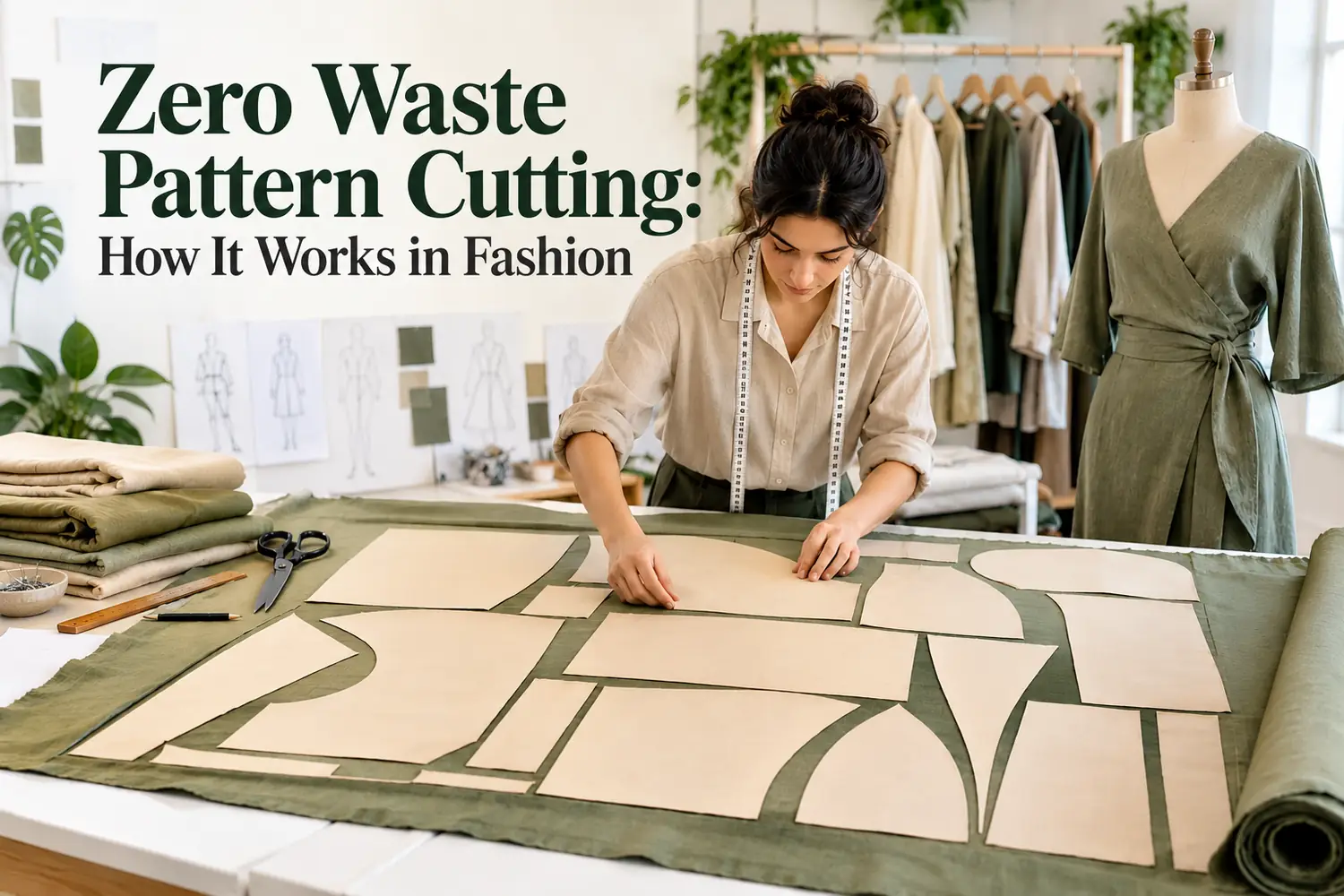
When garment patterns are cut from fabric, spaces between pieces can become scraps. Zero waste pattern cutting addresses this loss by developing the garment and fabric layout together.
What Is Zero Waste Pattern Cutting?
Zero waste pattern cutting plans garment pieces to use the available fabric as fully as possible. Pieces may fit together like a jigsaw, share cutting lines or use shapes that become part of the garment. Patternmaking becomes part of the creative design process.
A 2013 doctoral thesis by Timo Rissanen at the University of Technology Sydney cites research estimating that conventional cut-and-sew garment production wastes about 15 per cent of fabric during cutting. This is a research estimate, not a universal rate; waste varies by garment, fabric and marker layout. Zero waste aims to prevent cutting offcuts, not waste from defects, sampling, sewing or later stages.
How Does the Process Work?
- Designers check usable width and length, grain direction, print repeat, nap and defects. Selvages may reduce the usable area.
- Pattern pieces are arranged within the fabric area. Designers may change proportions, seams or shapes so the pieces fit together.
- Available spaces may become pockets, ties, collars or facings. Pleats, gathers and folds can also use fabric while creating shape, provided they suit the garment.
- A sample tests fit, movement, drape, seams and appearance.
- The final pattern needs instructions, suitable seam allowances and a repeatable layout. Record fabric use and leftovers to assess waste reduction.
Common Techniques and Related Tools
- Jigsaw or tessellation cutting arranges pattern pieces so their edges fit together across the fabric.
- Geometric cutting builds garments from shapes such as rectangles and squares. Folding, gathering and pleating can turn simple panels into wearable forms.
- Draping and wrapping develop a garment by shaping fabric on a body or dress form.
- Subtraction cutting, associated with designer Julian Roberts, uses openings in fabric to create spaces through which material is manipulated into garment shapes. It is a creative cutting approach, but a particular design should only be called zero waste if its actual layout avoids cutting waste.
Digital patternmaking and marker-making software can plan layouts and compare sizes, but software alone does not make a design zero waste. Fabric reduction must guide pattern development.
What Are the Benefits?
The main benefit is reducing cutting offcuts and making better use of material that already required resources to produce. Designing around fabric dimensions can also encourage new silhouettes and construction methods.
Less cutting waste does not automatically mean lower costs; design time, sampling or specialised construction may add expense.
Challenges and Limitations
Fit and comfort – Some layouts produce loose silhouettes, but zero waste does not require every garment to be boxy. Fit must be tested on the actual garment.
Fabric constraints – Stripes, checks, directional prints, nap and fabric defects can limit how pieces are placed or rotated. Fabric width and length also affect the layout.
Size grading – A pattern for one size may not work efficiently in another. Designers may need separate layouts or revised grading. Digital approaches to multi-size zero-waste patterns have been studied, but solutions depend on the design.
Manufacturing consistency – Factories need reliable patterns and repeatable assembly steps. Layouts must suit the supplied fabric and equipment; complex sizing can make production harder.
Waste beyond cutting – Fabric defects, samples, sewing scraps, packaging and unsold clothing are separate issues. A zero-waste cutting layout does not resolve them automatically.
How Is Success Measured?
A pattern layout should be assessed before describing it as zero waste. Designers can compare the fabric area planned for the garment with the area left unused after cutting, while accounting for material that cannot be used because of defects or required fabric direction. The method and boundary of measurement should be clear: a layout may eliminate offcuts from pattern shapes while production still creates waste elsewhere.
Testing also needs to include the finished garment. A layout that uses every part of the fabric is not successful if the garment restricts movement, has poorly placed seams or requires excessive correction during sewing. Prototype results help designers balance material use with fit, construction and appearance. For production, the pattern should be checked against the fabric width and the factory’s cutting process, not only a digital diagram.
For a useful comparison, record the fabric dimensions, layout method and any offcuts after cutting. State whether the assessment covers only the pattern layout or the complete production process. This makes claims easier to verify and helps teams identify where further material savings may be possible before approving a pattern.
Zero Waste and Low Waste Are Different
Zero waste pattern cutting aims to eliminate waste from the planned cutting layout. Low-waste design reduces offcuts but may leave some material unused. Conventional marker optimisation arranges existing pattern pieces efficiently, but usually works within a design that has already been developed. Zero-waste design allows fabric use to influence the garment and pattern from the beginning. These terms should not be treated as interchangeable when describing a design or reporting its results.
The Future of Fabric-Efficient Fashion Design
Zero waste pattern cutting brings fabric efficiency into the garment design process from the beginning. By planning pattern pieces and garment construction together, designers can reduce cutting waste while exploring new approaches to shape and construction. Its success depends on balancing material use with fit, comfort, durability and manufacturing requirements. Although it does not eliminate every form of textile waste, it offers a practical way to make more considered use of fabric in fashion design..
Build a More Responsible Fashion Collection
Looking to reduce fabric waste in your fashion collection? Explore The ODD Factory for fashion design, pattern development, sourcing and sustainable product development support.