Choosing organic fabric is only one part of developing clothing that meets recognised sustainability requirements. Brands must also consider how fibres are processed, which chemicals are used, how products move through the supply chain, and whether certification claims can be verified.
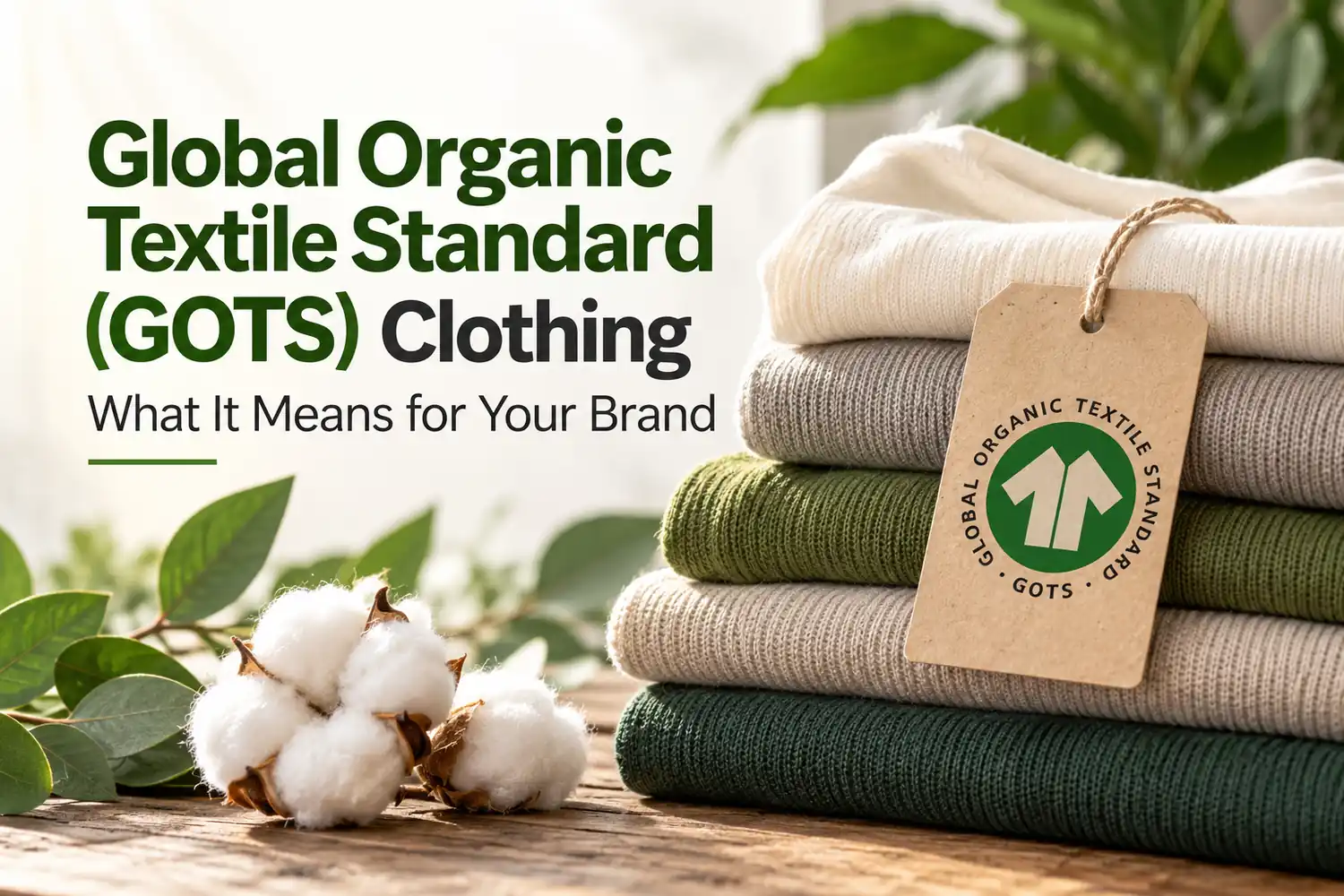
The Global Organic Textile Standard (GOTS) provides a framework for assessing these factors. For fashion brands, understanding GOTS can help with material selection, supplier verification, product labelling, and communicating accurate information to customers.
The applicable calculation excludes accessories and follows the standard’s detailed rules. Specific wording, including the percentage stated on a label, must comply with the applicable requirements.
GOTS Version 8.0 is currently in its transition period. Brands should confirm which version applies to their supplier, certification, and production timeline rather than assuming the new requirements are already mandatory for every certified entity.
What Is the Global Organic Textile Standard (GOTS)?
The Global Organic Textile Standard is an international standard for textiles made with certified organic fibres. It covers requirements across textile processing and manufacturing, including chemical inputs, environmental management, social criteria, and supply-chain traceability. GOTS is different from a certification that checks only the origin of raw cotton. It addresses multiple stages of textile production, helping businesses verify that eligible products meet defined requirements. For a clothing brand, this means that purchasing fabric described as organic is not, by itself, sufficient to establish that a finished garment qualifies as GOTS certified.What Makes Clothing GOTS Certified?
GOTS certification covers several areas that brands should understand before developing a collection.- Organic fibre content – The fibres used to meet the organic-content requirement must come from recognised organic production systems and have the required documentation.
- Chemical management – The standard restricts chemical inputs used during processing and sets requirements for substances and processes covered by its criteria.
- Environmental management – Applicable requirements address environmental practices during textile processing, including wastewater management where relevant.
- Social responsibility – The standard includes criteria relating to working conditions and labour practices within its certification framework.
- Supply-chain traceability – Relevant businesses and production stages must meet applicable certification and documentation requirements so that products can be traced through the supply chain.
Understanding GOTS Label Grades
GOTS uses label grades based on the certified fibre content of a textile product. Under Version 8.0, released in March 2026 and scheduled to become effective on 1 March 2027, the main grades are:| Label grade | Minimum certified fibre content |
| Organic | 95% certified organic fibres |
| Made with organic materials | 70% certified organic fibres |
What GOTS Certification Means for Your Clothing Brand
GOTS can affect several stages of product development and manufacturing.- Material selection – Brands need to verify fibre composition and ensure that relevant fabrics, dyes, finishes, and other inputs meet the applicable requirements.
- Supplier selection – A supplier’s certification must cover the relevant activities and product categories. A certificate for one operation does not automatically establish that every product manufactured by the business qualifies.
- Production planning – Coordinate sampling, manufacturing, documentation, and traceability across the relevant supply chain.
- Marketing and labelling – The GOTS logo and certification claims must follow the applicable rules. Under current labelling guidance, labels include the logo, label grade, approved certification body’s reference, and the certified entity’s identification number. The relevant certification body must approve the labelling before use.
GOTS vs OEKO-TEX: What Is the Difference?
GOTS and OEKO-TEX address different aspects of textile production.- GOTS covers certified organic fibre content, processing requirements, environmental management, social criteria, and traceability.
- OEKO-TEX offers several programmes, including STANDARD 100, which tests textile products for harmful substances against its applicable criteria.
How to Verify a GOTS-Certified Supplier
Before placing an order, take the following steps:- Request the supplier’s current GOTS Scope Certificate.
- Check that the certificate covers the relevant facility, product category, and processing activities.
- Verify the supplier through the official GOTS certified supplier database.
- Request the appropriate Transaction Certificate for the specific shipment where applicable.
- Confirm that the finished product and proposed labelling meet the applicable requirements.