

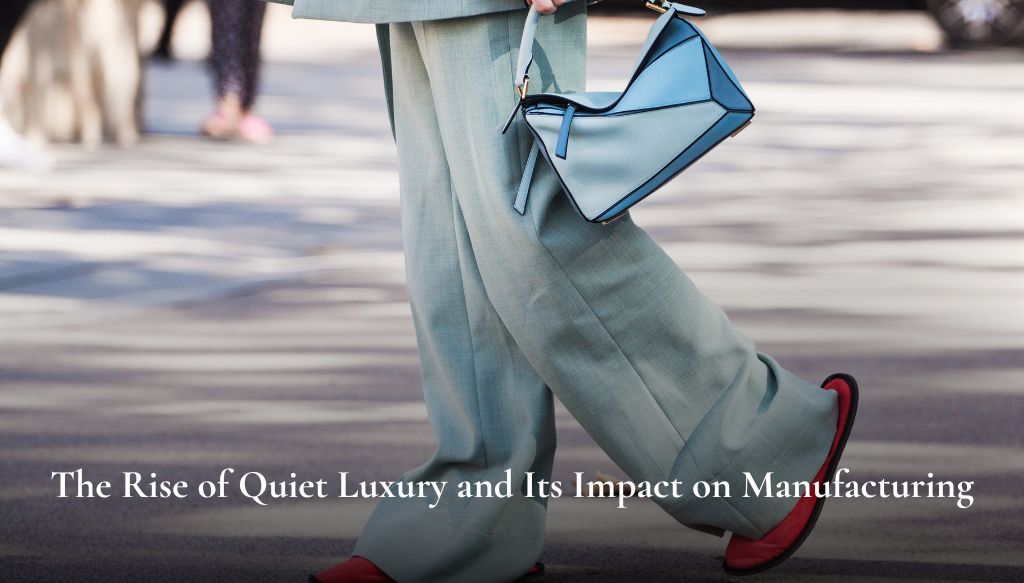
Fashion trends come and go, but every so often a movement emerges that reshapes the industry at a deeper level. One of the most influential shifts in recent years has been the rise of quiet luxury. Unlike logo-heavy fashion and trend-driven collections, quiet luxury focuses on exceptional quality, refined craftsmanship, timeless design, and understated elegance.
Consumers are increasingly moving away from overt displays of wealth and toward products that communicate sophistication through quality rather than branding. This change is influencing not only design aesthetics but also the way garments are sourced, developed, and manufactured.
For manufacturers, quiet luxury represents a significant opportunity, but it also raises the standards for production, sourcing, and quality control.
What Is Quiet Luxury?
Quiet luxury refers to products that emphasize craftsmanship, premium materials, and timeless design rather than obvious branding or seasonal trends. These garments are often recognized by their superior construction, fabric quality, fit, and attention to detail.
Rather than relying on logos or flashy embellishments, quiet luxury brands focus on creating pieces that feel exceptional to wear and stand the test of time.
The philosophy is simple: quality speaks louder than branding.
This trend has gained momentum among consumers seeking long-term value, versatility, and authenticity in their wardrobes.
Why Consumers Are Embracing Quiet Luxury
Several factors have contributed to the rise of quiet luxury.
First, consumers have become more conscious of quality and longevity. Rather than purchasing multiple trend-driven garments each season, many buyers prefer investing in fewer, better-made pieces.
Second, social media has shifted consumer preferences. While luxury once centered around visible status symbols, modern consumers increasingly appreciate subtle sophistication and craftsmanship.
Finally, economic uncertainty has encouraged smarter purchasing decisions. Buyers want garments that offer versatility, durability, and timeless appeal rather than short-term trend relevance.
As a result, brands are responding by creating collections that prioritize quality over excess.
How Quiet Luxury Is Changing Product Development
The rise of quiet luxury has fundamentally changed how fashion products are developed.
Instead of focusing on rapid trend adaptation, brands are investing more time in fabric selection, fit development, construction quality, finishing techniques, product testing.
A quiet luxury garment may appear simple on the surface, but achieving that simplicity requires exceptional precision.
Every seam, stitch, and silhouette must be carefully considered because there are fewer visual elements to distract from imperfections.
In quiet luxury, craftsmanship becomes the product.
The Manufacturing Challenge
Producing garments for quiet luxury brands requires a different manufacturing mindset.
In mass-market production, speed and volume are often the primary objectives. Quiet luxury manufacturing, however, prioritizes consistency, precision, and attention to detail.
Manufacturers must ensure that fabric quality remains consistent across batches, stitching is clean and durable, garment fit remains accurate, finishing standards are exceptionally high and quality control systems identify even minor flaws.
Consumers purchasing premium products have higher expectations, making manufacturing excellence essential.
Fabric Selection Becomes Critical
One of the defining characteristics of quiet luxury is material quality.
Consumers increasingly evaluate garments based on:
- Fabric hand feel
- Drape and structure
- Comfort
- Durability
- Longevity
As a result, brands are seeking access to premium fabrics such as:
- Fine cottons
- Merino wool
- Linen blends
- Silk derivatives
- Sustainable luxury textiles
For manufacturers, this means developing strong supplier networks and sourcing capabilities to meet these evolving demands.
The ability to source high-quality materials is becoming a competitive advantage.
Quiet Luxury and Small-Batch Manufacturing
Interestingly, the rise of quiet luxury has also increased interest in smaller production runs.
Many premium brands prefer limited collections, controlled inventory, seasonal refinement and lower production waste.
This approach allows brands to maintain exclusivity while improving quality oversight.
For manufacturers, small-batch production requires greater flexibility and operational efficiency. Instead of relying solely on volume, success increasingly depends on adaptability and craftsmanship.
Quality Control Takes Center Stage
In quiet luxury manufacturing, quality control is no longer a final checkpoint. It becomes an integrated process throughout production.
Inspection must occur during fabric sourcing, pattern development, sampling, production, finishing, packaging.
Minor inconsistencies that might be acceptable in mass-market garments can significantly impact customer perception in premium collections.
The margin for error becomes much smaller.
Sustainability and Quiet Luxury
Another reason quiet luxury continues to gain traction is its natural alignment with sustainability.
Because these garments are designed to last longer, consumers purchase fewer pieces and replace them less frequently.
This approach encourages responsible consumption, higher-quality production, reduced waste and better product longevity.
Many quiet luxury brands are also incorporating sustainable sourcing and ethical manufacturing practices into their business models.
As consumers become more environmentally conscious, these values are becoming increasingly important.
Why Manufacturers Must Adapt
The growth of quiet luxury is changing what brands expect from their manufacturing partners.
Today, manufacturers are expected to provide more than production capacity. They must also offer:
- Fabric expertise
- Quality assurance systems
- Vendor sourcing support
- Product development guidance
- Flexibility for smaller runs
Brands are increasingly looking for manufacturing partners who understand premium positioning and can support long-term growth.
This shift is creating opportunities for manufacturers who prioritize craftsmanship and consistency.
The Future of Quiet Luxury
Quiet luxury is more than a trend. It reflects a broader shift in consumer behavior toward intentional purchasing and quality-focused living.
As the market continues to evolve, brands that emphasize timeless design, premium materials, exceptional construction, authentic storytelling will likely continue to gain traction.
Manufacturers who adapt to these expectations will be better positioned to support the next generation of premium fashion brands.
Building a premium fashion brand requires more than great design. It requires the right manufacturing ecosystem.
At The ODD Factory, we help fashion brands source premium fabrics, develop production-ready collections, connect with vetted suppliers, and manufacture high-quality garments that meet modern luxury standards.
👉 Explore our collection development and vendor sourcing resources:
https://theoddfactory.com/shop/end-to-end-collection-development-vendors/
Create products that stand the test of time, not just the season.
Final Thoughts
The rise of quiet luxury is reshaping fashion from the inside out. While consumers may see minimalist designs and understated aesthetics, the reality behind these products is a complex manufacturing process built on precision, quality, and craftsmanship.
For brands, quiet luxury offers a pathway to stronger customer loyalty and long-term value.
For manufacturers, it presents an opportunity to move beyond volume-driven production and become strategic partners in creating products that truly stand apart.
In a world saturated with trends and constant noise, quality is once again becoming the ultimate luxury.