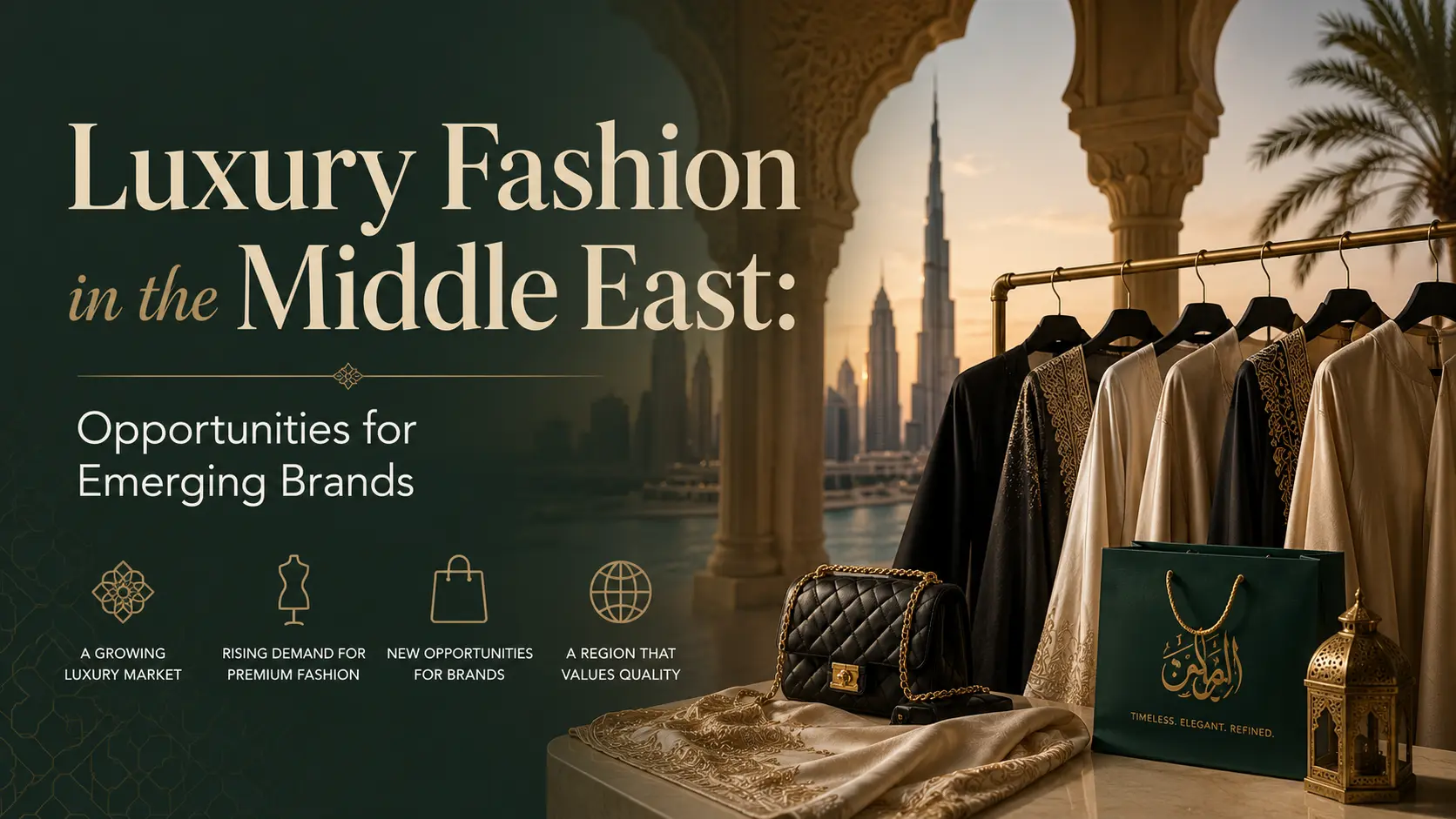
The Middle East has become one of the world’s fastest-growing luxury fashion markets. Countries such as the United Arab Emirates, Saudi Arabia, Qatar, and Kuwait are experiencing a significant rise in demand for premium fashion, driven by increasing disposable incomes, a young style-conscious population, thriving tourism, and a growing appreciation for craftsmanship.
For emerging fashion brands, this presents a valuable opportunity to expand into a market that values exclusivity, quality, and timeless design. However, succeeding in the region requires more than exporting garments. Brands must understand local preferences, cultural expectations, and the importance of premium manufacturing.
Whether you’re an independent designer or an established label looking to enter new markets, understanding the Middle Eastern luxury landscape can help position your brand for long-term success.
Why the Middle East Is Becoming a Global Luxury Fashion Hub
Over the last decade, the Middle East has transformed into a global destination for luxury retail. Cities like Dubai, Abu Dhabi, Doha, and Riyadh are home to some of the world’s largest luxury shopping destinations, international fashion events, and high-end consumers who appreciate exceptional craftsmanship.
The region has also witnessed rapid growth in local fashion entrepreneurship. Many consumers now seek brands that combine international quality with unique design stories rather than purchasing only well-known luxury labels.
This creates opportunities for emerging brands that can offer originality, premium quality, and authentic craftsmanship.
A Growing Consumer Base With High Purchasing Power
One of the biggest advantages of entering the Middle Eastern market is the strong purchasing power of its consumers.
Luxury shoppers in the region are increasingly investing in quality garments instead of fast fashion. They value products that offer exclusivity, superior fabrics, refined tailoring, and long-lasting appeal.
Consumers are also willing to pay premium prices when they perceive genuine value, making the region attractive for brands positioned in the premium and luxury segments.
The Shift Toward Quiet Luxury
The global trend of quiet luxury has found a strong audience in the Middle East.
Rather than focusing solely on visible logos, many consumers are embracing understated elegance, timeless silhouettes, premium materials, and exceptional craftsmanship.
This shift allows emerging brands to compete on quality instead of brand recognition.
Luxury today is increasingly defined by:
Traditional Luxury | Modern Quiet Luxury |
Prominent logos | Understated elegance |
Trend-driven collections | Timeless design |
Brand recognition | Superior craftsmanship |
Seasonal purchases | Long-term wardrobe investment |
Visible status symbols | Premium materials and tailoring |
Brands that emphasize thoughtful design and exceptional quality are well positioned to benefit from this evolving consumer mindset.
Modest Fashion Continues to Grow
The Middle East is one of the world’s largest markets for modest fashion.
However, modest fashion today is no longer limited to traditional silhouettes. Consumers increasingly seek garments that combine elegance, contemporary design, premium fabrics, and sophisticated tailoring while respecting cultural preferences.
This includes:
- Luxury abayas
- Contemporary kaftans
- Premium co-ord sets
- Tailored outerwear
- Evening wear
- Resort collections
- Occasion dressing
For manufacturers and designers, this creates opportunities to develop products specifically tailored to regional preferences.
Premium Fabrics Matter More Than Ever
Luxury consumers evaluate garments through touch, comfort, and craftsmanship.
Fabric quality often becomes one of the strongest differentiators between premium and mass-market brands.
Popular materials include:
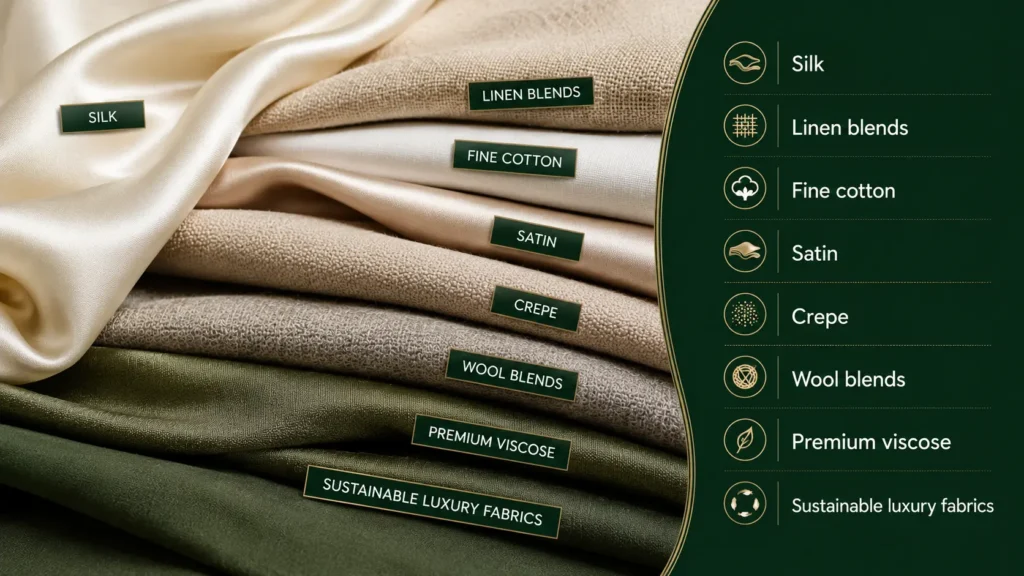
Working with experienced sourcing partners ensures consistency across collections while maintaining premium standards.
Craftsmanship Is a Competitive Advantage
Luxury buyers pay close attention to details.
They appreciate:
- Perfect garment construction
- Clean finishing
- Hand embroidery
- Precision tailoring
- Premium trims
- Superior fit
- High-quality packaging
Every element contributes to the overall customer experience.
For emerging brands, investing in craftsmanship often delivers greater long-term value than investing heavily in advertising.
Manufacturing Partners Matter
Entering a luxury market requires manufacturing partners capable of consistently delivering premium quality.
The right manufacturing partner should provide product development support, premium fabric sourcing, sampling expertise, quality assurance, small-batch production, flexible MOQs, reliable production timelines.
Choosing an experienced manufacturing partner reduces production risks and helps maintain brand reputation.
Sustainability Is Becoming a Luxury Expectation
Consumers in the Middle East are becoming increasingly conscious of sustainability.
Many luxury buyers now consider responsible sourcing, ethical manufacturing, eco-friendly fabrics, durable products, transparent supply chains.
Brands that combine sustainability with luxury craftsmanship are building stronger customer loyalty.
Digital Commerce Is Expanding Luxury Fashion
Luxury shopping is no longer limited to physical boutiques.
Consumers across the UAE, Saudi Arabia, Kuwait, and Qatar increasingly discover new brands through:
- Luxury marketplaces
- Fashion influencers
- Brand websites
- Digital campaigns
This creates opportunities for emerging brands to establish a regional presence without immediately investing in physical retail stores.
A strong digital strategy combined with premium manufacturing creates a scalable path for international growth.
Why Indian Manufacturers Have an Advantage
India has long been recognized for its textile heritage, craftsmanship, embroidery techniques, and garment manufacturing expertise.
For Middle Eastern fashion brands, Indian manufacturers offer access to premium fabrics, skilled artisans, competitive production costs, flexible order quantities, diverse manufacturing capabilities, strong product development expertise.
As a result, many premium brands partner with Indian manufacturers to develop luxury collections that meet international quality standards.
How Emerging Brands Can Enter the Middle Eastern Market
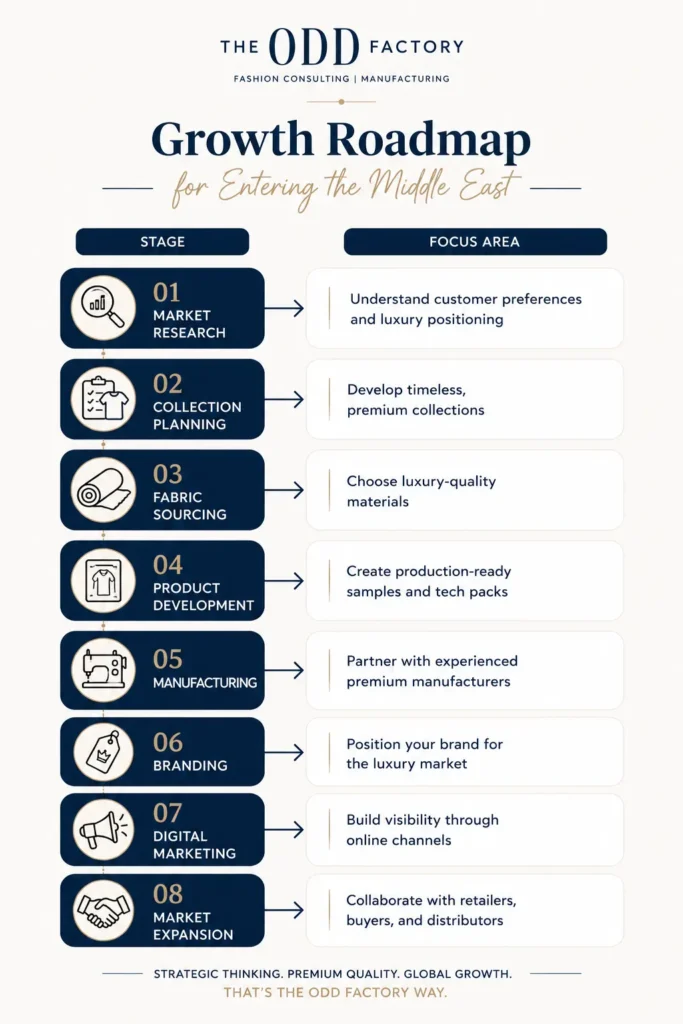
Expanding into a new market requires thoughtful planning rather than simply exporting existing products.
Brands should focus on understanding local consumer preferences, adapting collections where necessary, investing in premium fabrics, maintaining consistent quality, and building relationships with reliable manufacturing and sourcing partners.
Success often comes from creating products that respect regional tastes while maintaining a distinctive brand identity.
Growth Roadmap for Entering the Middle East
Final Thoughts
The Middle East offers tremendous opportunities for emerging luxury fashion brands willing to prioritize quality, craftsmanship, and strategic planning.
Consumers are increasingly seeking brands that combine timeless design with premium materials and authentic storytelling. This creates space for independent labels to compete alongside established luxury names.
Success in the region is not driven solely by marketing or branding. It begins with exceptional product development, reliable manufacturing, thoughtful collection planning, and a deep understanding of the market.
Brands that invest in these foundations today will be well positioned to grow in one of the world’s most dynamic luxury fashion markets.
Build Luxury Collections With Confidence
At The ODD Factory, we help fashion brands develop premium collections through strategic consulting, luxury product development, tech pack creation, fabric sourcing, vendor connections, and end-to-end manufacturing support.
Whether you’re launching your first luxury label or preparing to expand into the Middle East, our experienced team can help you build collections that meet international quality standards.
Explore our End-to-End Collection Development Vendors List and connect with trusted suppliers and manufacturers for your next collection:
https://theoddfactory.com/product/end-to-end-collection-development-vendors/