
The fashion industry is undergoing a quiet but powerful transformation. While most conversations around augmented reality (AR) and virtual try-on tools focus on customer experience, their impact is now extending far beyond marketing. In 2026, these technologies are directly influencing how fashion brands plan, design, and produce collections.
For brands aiming to improve profitability and reduce waste, AR is no longer just a digital gimmick. It is becoming a strategic tool that shapes production decisions from the earliest stages.
From Customer Experience to Production Intelligence
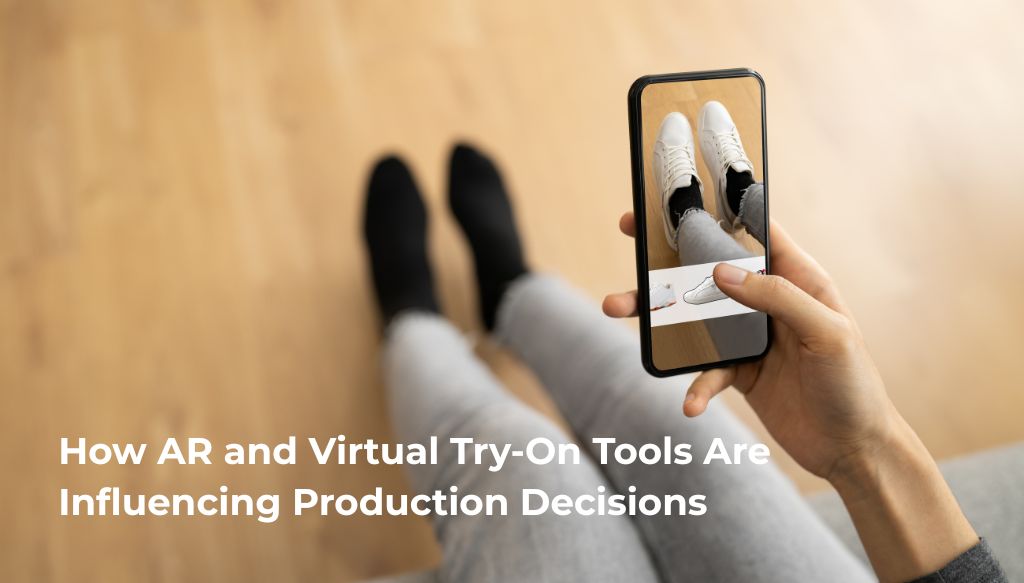
Initially, AR and virtual try-on tools were introduced to enhance online shopping. They allowed customers to visualize how garments would look without physically trying them on. This reduced uncertainty and improved conversion rates.
Today, forward-thinking brands are using the same technology to gather insights before production begins. Virtual try-ons generate valuable data on customer preferences, fit issues, and style performance. This data is now feeding directly into design refinement and production planning.
Instead of relying solely on historical sales or intuition, brands can make decisions based on real-time interaction data.
Reducing Sampling Costs and Time
Sampling has traditionally been one of the most expensive and time-consuming stages in fashion production. Multiple iterations, shipping delays, and material waste often increase costs significantly.
With AR, designers can simulate garments digitally and visualize fit, drape, and styling before creating physical samples. Virtual prototypes allow teams to identify design flaws early and make adjustments without incurring production costs.
This is particularly beneficial for brands working with luxury clothing suppliers or high end clothing suppliers, where each sample can be expensive. By reducing the number of physical samples required, brands can save both time and resources while maintaining quality.
Data-Driven Demand Forecasting
One of the biggest challenges in fashion is predicting demand accurately. Overproduction leads to markdowns and waste, while underproduction results in missed revenue opportunities.
Virtual try-on tools help bridge this gap by offering early demand signals. Brands can test multiple designs digitally and track which styles receive the highest engagement or conversion intent.
This allows for more precise production planning. Instead of producing large quantities based on assumptions, brands can align production volumes with actual consumer interest.
For sustainable clothing manufacturers, this shift is especially important. It supports responsible production practices by minimizing excess inventory and reducing environmental impact.
Improving Fit and Reducing Returns
Fit issues are one of the leading causes of returns in fashion e-commerce. Returns not only affect profitability but also create logistical and environmental challenges.
AR-driven try-on tools help customers choose better-fitting garments by providing realistic visualizations. Over time, the data collected from these interactions helps brands refine sizing standards and patterns.
Production teams can use this information to improve consistency across collections. Better fit leads to fewer returns, higher customer satisfaction, and improved margins.
Enabling Faster Design Iterations
Speed is a competitive advantage in today’s fashion landscape. Brands that can move from concept to market quickly are better positioned to capture trends and respond to consumer demand.
AR tools enable faster iteration cycles. Designers can test variations in color, fabric, silhouette, and detailing without waiting for physical samples. This accelerates decision-making and shortens development timelines.
Fashion brand consultants are increasingly incorporating AR insights into their strategy recommendations. By combining creative direction with data-backed validation, brands can launch collections with greater confidence.
Enhancing Collaboration Across Teams
Production decisions often involve multiple stakeholders, including designers, merchandisers, suppliers, and marketing teams. Miscommunication at any stage can lead to costly errors.
Virtual prototypes and AR visualizations create a shared reference point for all teams. Everyone involved can see the same digital representation of the product, reducing ambiguity and improving alignment.
This is especially valuable when working with global suppliers. Clear visualization helps ensure that expectations around design and quality are understood before production begins.
Supporting Sustainable Production Practices
Sustainability is becoming a core priority for fashion brands. AR and virtual try-on tools contribute to this goal in several ways.
By reducing the need for physical samples, minimizing returns, and enabling demand-driven production, these technologies help lower waste and resource consumption.
Brands collaborating with sustainable clothing manufacturers can use AR as part of their sustainability strategy. It allows them to align production more closely with actual demand, reducing excess inventory and environmental impact.
Challenges and Considerations
Despite its advantages, AR adoption comes with challenges. Technology integration, initial investment, and data accuracy are key considerations.
Not all virtual try-on tools deliver the same level of realism. Poor implementation can lead to inaccurate insights and misinformed decisions. Brands must choose technology partners carefully and ensure proper calibration.
Additionally, AR should complement, not replace, human expertise. Designers, consultants, and production teams still play a critical role in interpreting data and making final decisions.
The Future of Production in Fashion
AR and virtual try-on tools are redefining how fashion brands approach production. What was once a linear process is becoming more dynamic, data-driven, and efficient.
Brands that embrace these technologies are gaining a competitive edge through faster development cycles, improved accuracy, and reduced waste. More importantly, they are building production systems that are aligned with modern consumer expectations.
As the industry moves forward, AR will not just influence how clothes are sold. It will fundamentally shape how they are made.