

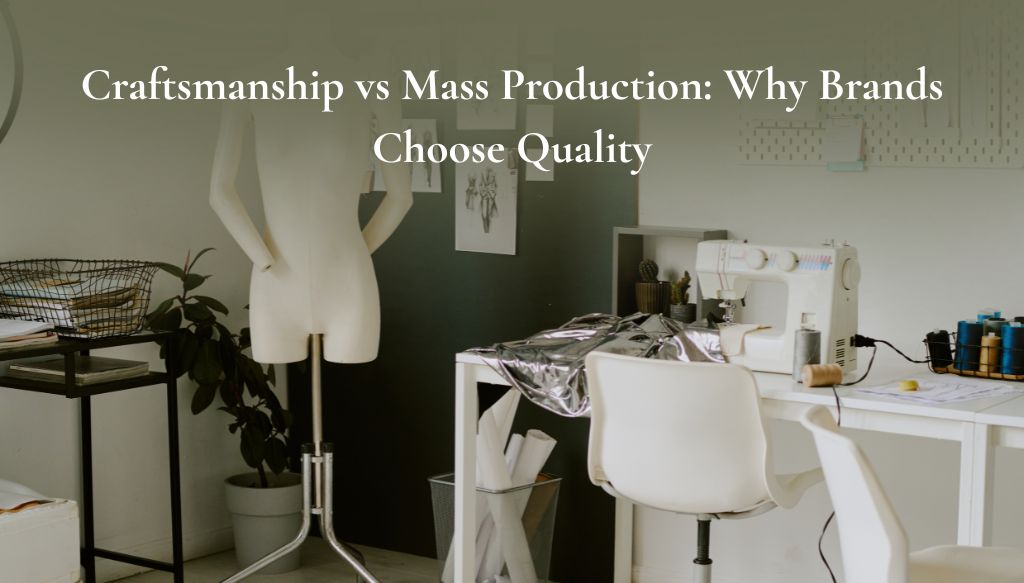
In the fashion industry, production choices define brand identity. Behind every garment lies a decision — to prioritize speed and scale, or precision and quality. This choice often comes down to two distinct approaches: craftsmanship or mass production.
While mass production dominates fast fashion, an increasing number of brands are shifting toward craftsmanship. For emerging labels, luxury houses, and conscious fashion entrepreneurs, quality is no longer optional. It is strategic.
Understanding Mass Production in Fashion
Mass production focuses on high volume, speed, and cost efficiency. It is designed to manufacture large quantities quickly using standardized systems and automation.
This model works well for:
- Trend-driven collections
- Low-cost retail brands
- High-volume marketplace sellers
However, mass production often limits customization, restricts flexibility, and reduces attention to detail. When speed becomes the priority, refinement may suffer.
In mass-market systems, garments move through assembly lines where specialization increases efficiency, but craftsmanship may decrease.
What Defines Craftsmanship in Manufacturing
Craftsmanship is rooted in precision, skill, and intentional execution. It emphasizes detail over speed and quality over volume.
A craftsmanship-led approach includes:
- Skilled pattern development
- Fabric-specific handling techniques
- Controlled stitching precision
- Detailed finishing and inspection
- Lower error tolerance
Craftsmanship does not necessarily mean handmade couture. It means manufacturing with discipline, structure, and respect for material and design.
Why Modern Brands Are Choosing Quality
1. Brand Perception and Positioning
Consumers today are more discerning. They assess garments not only by aesthetics but also by feel, structure, and durability. Brands investing in craftsmanship signal premium value.
A well-finished garment elevates brand perception instantly. Clean seams, balanced silhouettes, and thoughtful construction communicate reliability and refinement.
In contrast, visible defects or inconsistencies can damage brand credibility.
2. Longevity Builds Loyalty
Mass-produced garments often prioritize speed over durability. In contrast, craftsmanship emphasizes construction techniques that extend a garment’s lifespan.
Reinforced seams, careful stitching, proper lining, and structured finishing increase wearability. This longevity strengthens customer trust and encourages repeat purchases.
For brands focused on long-term growth, quality becomes a retention strategy.
3. Flexibility and Customization
Craftsmanship-oriented manufacturers offer greater flexibility. They can adapt silhouettes, refine fit, adjust detailing, and experiment with specialty fabrics.
Mass production lines are built for repetition, not refinement. For brands creating limited collections, luxury garments, or niche designs, craftsmanship offers more creative control.
This flexibility is particularly valuable for designers serving Middle Eastern markets or luxury segments, where detailing and fabric precision matter deeply.
4. Reduced Returns and Waste
Quality manufacturing reduces post-sale issues. Poor stitching, weak seams, or inconsistent sizing often lead to returns, refunds, and customer dissatisfaction.
By investing in craftsmanship, brands reduce:
- Quality complaints
- Rework costs
- Inventory losses
- Brand reputation risks
In the long term, this reduces operational strain and improves margins.
The Business Case for Craftsmanship
Choosing craftsmanship does not mean sacrificing scalability. It means building systems that prioritize quality within production.
High-end manufacturers combine:
- Structured sampling protocols
- Detailed tech pack execution
- Skilled technicians
- Layered quality checks
This ensures consistency even when production volumes increase.
Brands that adopt a craftsmanship-led model often find that slightly higher production costs are offset by stronger pricing power and reduced returns.
Craftsmanship and Sustainability
Quality and sustainability are closely connected. Well-made garments last longer, reducing the need for replacement and decreasing textile waste.
Brands embracing slow fashion and ethical production models naturally gravitate toward craftsmanship. Precision manufacturing also minimizes fabric waste and sampling errors.
In a market increasingly conscious of environmental impact, quality becomes part of the sustainability narrative.
When Mass Production Makes Sense
Mass production is not inherently negative. It serves specific business models effectively. For brands built on affordability and rapid trend turnover, it remains efficient.
However, for labels aiming to establish premium positioning, enter global markets, or build long-term brand equity, craftsmanship provides stronger differentiation.
The key lies in alignment. The manufacturing model must support the brand vision.
Choosing the Right Manufacturing Partner
Selecting between craftsmanship and mass production is less about ideology and more about strategy.
Brands should evaluate:
- Target customer expectations
- Price positioning
- Collection complexity
- Desired brand longevity
- Market competitiveness
Working with a manufacturer who understands both scale and quality allows brands to grow without compromising their standards.
Final Thoughts
Craftsmanship versus mass production is not simply a technical comparison. It is a strategic decision that shapes brand identity, customer loyalty, and long-term profitability.
In today’s competitive fashion landscape, quality has become a differentiator. Brands choosing craftsmanship are not rejecting scale — they are redefining it.
Luxury, durability, and precision are no longer niche preferences. They are market expectations.
And for brands looking to build lasting value, quality is not an expense. It is an investment.